
- Home
- Journal
- Sailing & Charters
- Can I Charge My Camera Batteries on the Boat?
Can I Charge My Camera Batteries on the Boat?
Yes, in practice — Indonesian mains is 230V, 50Hz with Type C and F sockets, and a boat running air conditioning in eight cabins is generating power continuously. What is …
- Published 1 August 2026
- Read time 9 min
- Topic Sailing & Charters
Yes, in practice — Indonesian mains is 230V, 50Hz with Type C and F sockets, and a boat running air conditioning in eight cabins is generating power continuously. What is not published is the socket count per cabin or the generator schedule, so bring spare batteries and a multi-port charger rather than relying on a free outlet.
Can I charge my camera batteries on the boat?
Short answer: yes. Longer answer: bring enough batteries that you would survive if the answer were no.
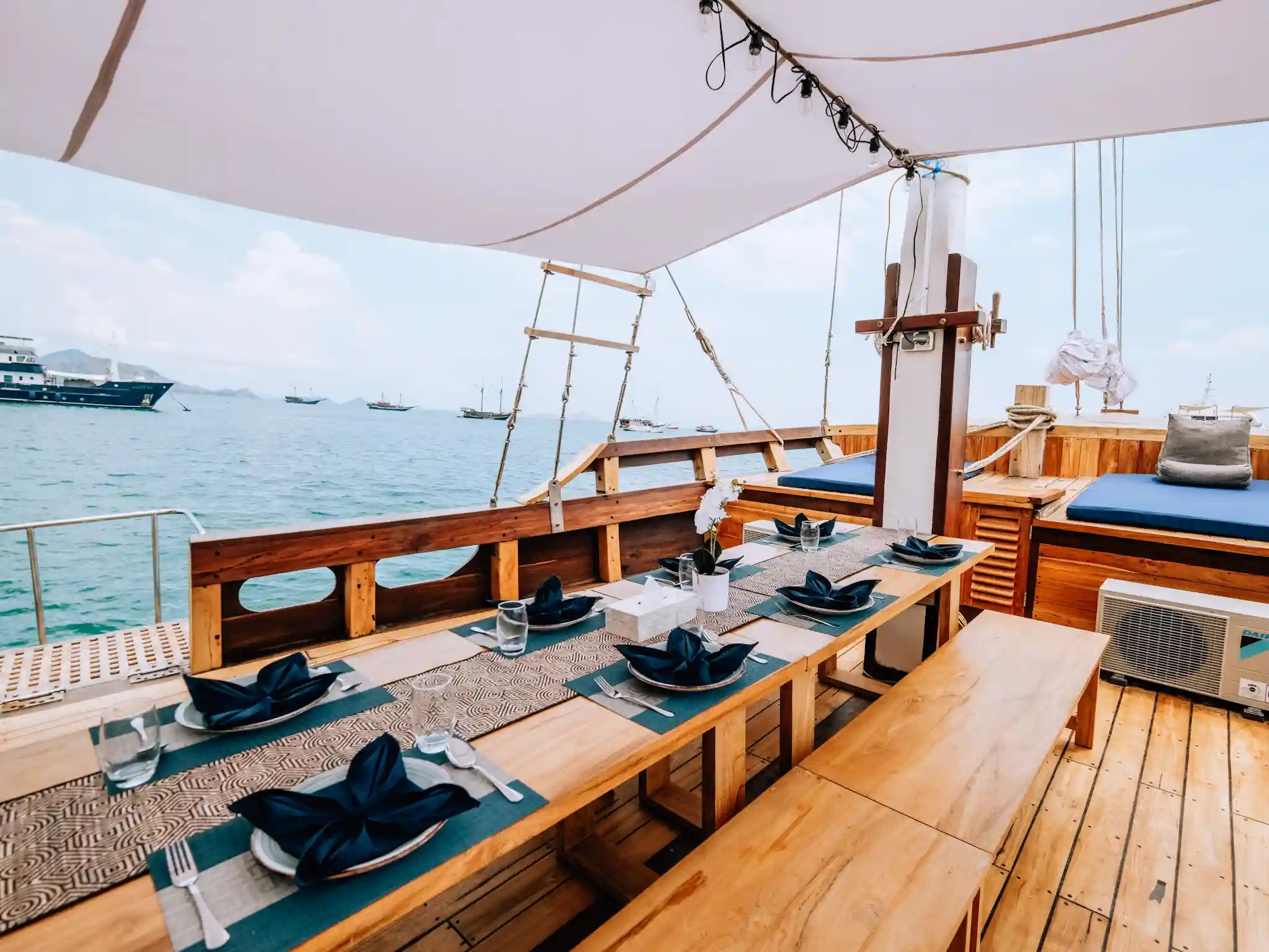
Here is what is actually established. Aura Suci runs air conditioning in all eight cabins and carries 12,000 litres of fresh water with pumped systems, which means continuous onboard electrical generation rather than a battery bank switched on for an hour a day. Indonesia’s mains standard is 230 volts at 50 Hz, with Type C and Type F sockets — the two-round-pin European plug. Your camera charger, phone brick and laptop adapter almost certainly handle 100–240V already; check the small print on the adapter and bring a plug adapter if you are coming from the UK, US or Australia.
| Item | Detail |
|---|---|
| Mains voltage | 230 V |
| Frequency | 50 Hz |
| Socket type | Type C and Type F (two round pins) |
| Adapter needed from | UK (Type G), US and Japan (Type A/B), Australia (Type I) |
| Dual-voltage devices | Most modern camera and laptop chargers are 100–240 V |
| Sockets per cabin | Not published — ask the reservations desk |
| Generator schedule | Not published — ask the reservations desk |
Voltage and socket type are the Indonesian national standard. Onboard socket count and generator hours vary by vessel and are not published for this boat.
How much power you will actually want
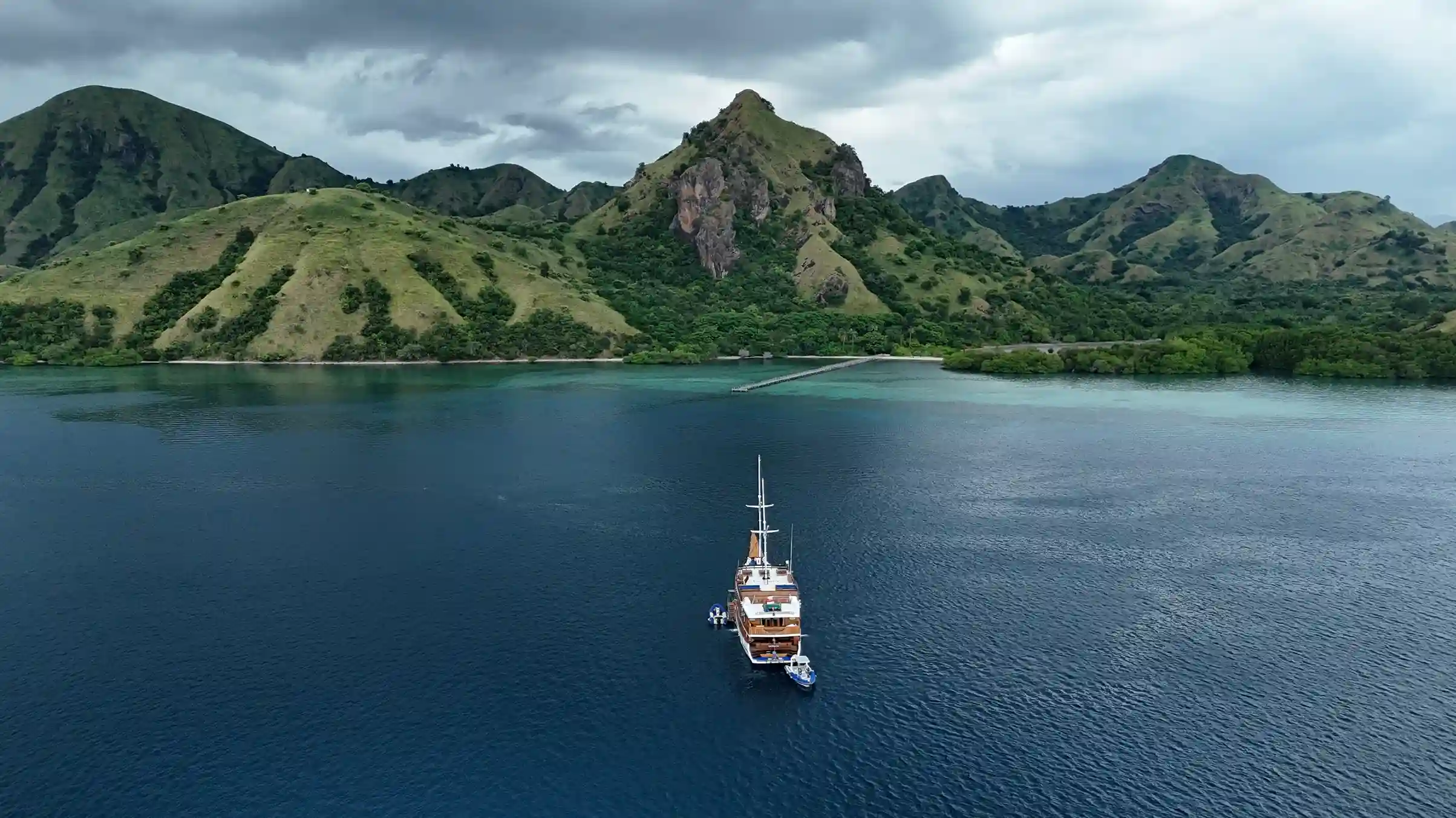
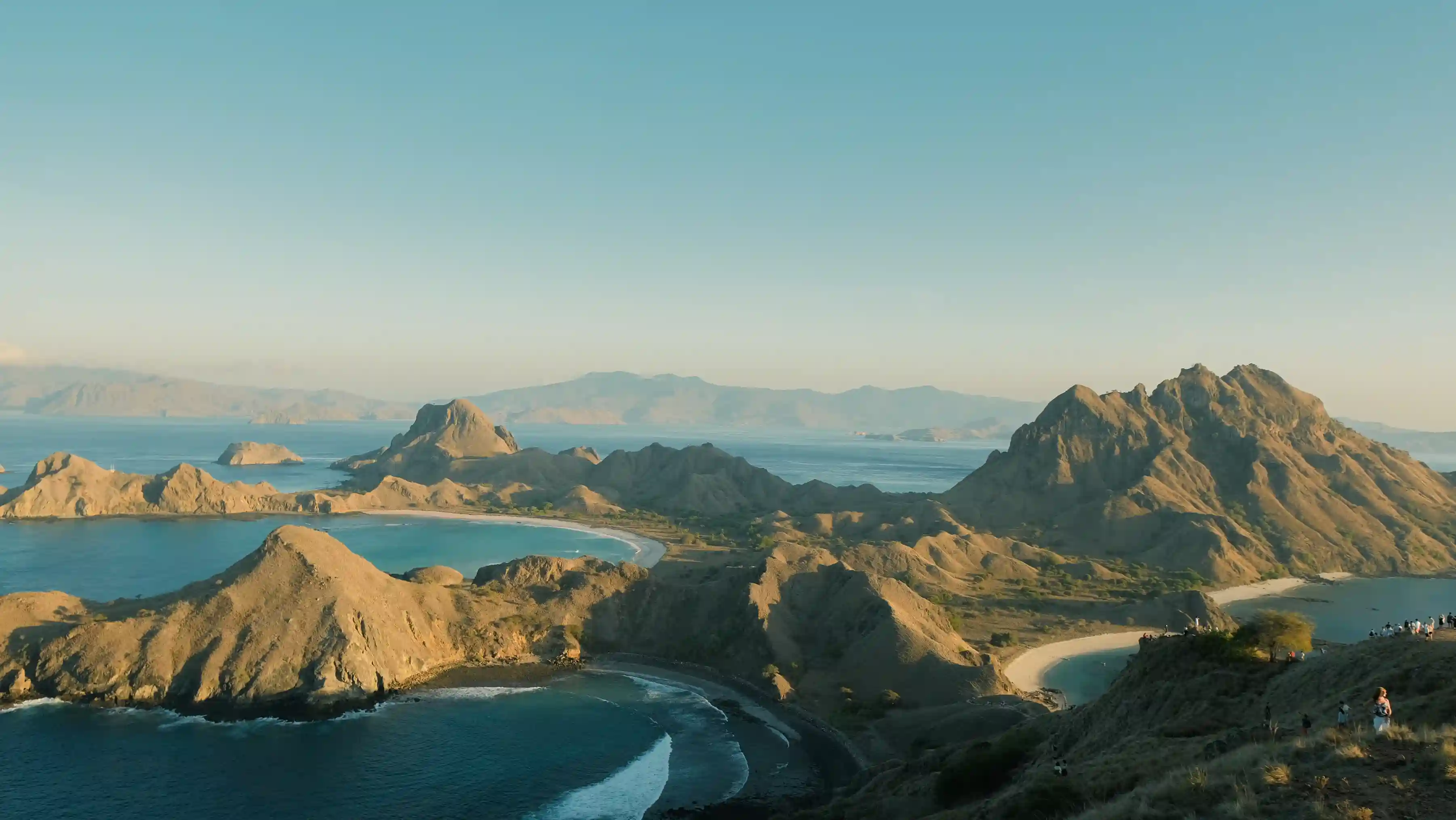
The trip’s two big photographic moments are both at the edges of the day and both drain batteries: the Padar ridge at sunrise, and the Kalong bat flight at dusk. Add snorkelling video at Karang Makassar and Taka Makassar in bright sun, and a typical mirrorless body will run through more power in a day than it does at home.
| Kit | Batteries to bring | Notes |
|---|---|---|
| Phone only | One power bank of 10,000–20,000 mAh | Simplest solution; charges overnight in the cabin |
| Mirrorless or DSLR | 3–4 batteries plus charger | Sunrise and dusk shooting drains faster than daytime |
| Action camera (GoPro or similar) | 3–4 batteries | Small batteries, heavy use, and they die fastest in the water |
| Drone | 2–3 flight batteries | Check current park rules before flying; permissions in the park are restricted |
| Laptop | Leave it ashore if you can | There is no signal to use it with anyway |
Practical charging etiquette
- Bring a multi-port USB charger. One socket, four devices. This is the single most useful item on a boat with twenty-four guests.
- Bring a short extension lead if you have a lot of kit. Cabin sockets are rarely near the bed.
- Charge overnight in your cabin rather than leaving equipment in communal areas. Salt spray, wet hands and a moving deck are not kind to electronics.
- Do not leave chargers plugged in unattended in shared space. On a wooden boat this is a fire-risk courtesy as much as a manners one.
- Ask before using galley or wheelhouse sockets. Those circuits are working equipment.
- Bring a dry bag. The bigger risk to your camera on this trip is water in a tender, not a flat battery.
Send your dates and we will come back with live cabin availability on Aura Suci.
The questions to send before departure
- How many sockets are in each cabin, and what type?
- Is power available 24 hours or on a generator schedule?
- Are there charging points in the communal areas?
- Is there a dry, secure place to store camera equipment between stops?
These are ordinary questions and a reservations desk answers them in a sentence each. The reason to ask rather than assume is that socket counts genuinely differ between vessels of the same size, and photographers who arrive with four bodies and one charger spend three days negotiating.
Protecting the camera, not just the battery
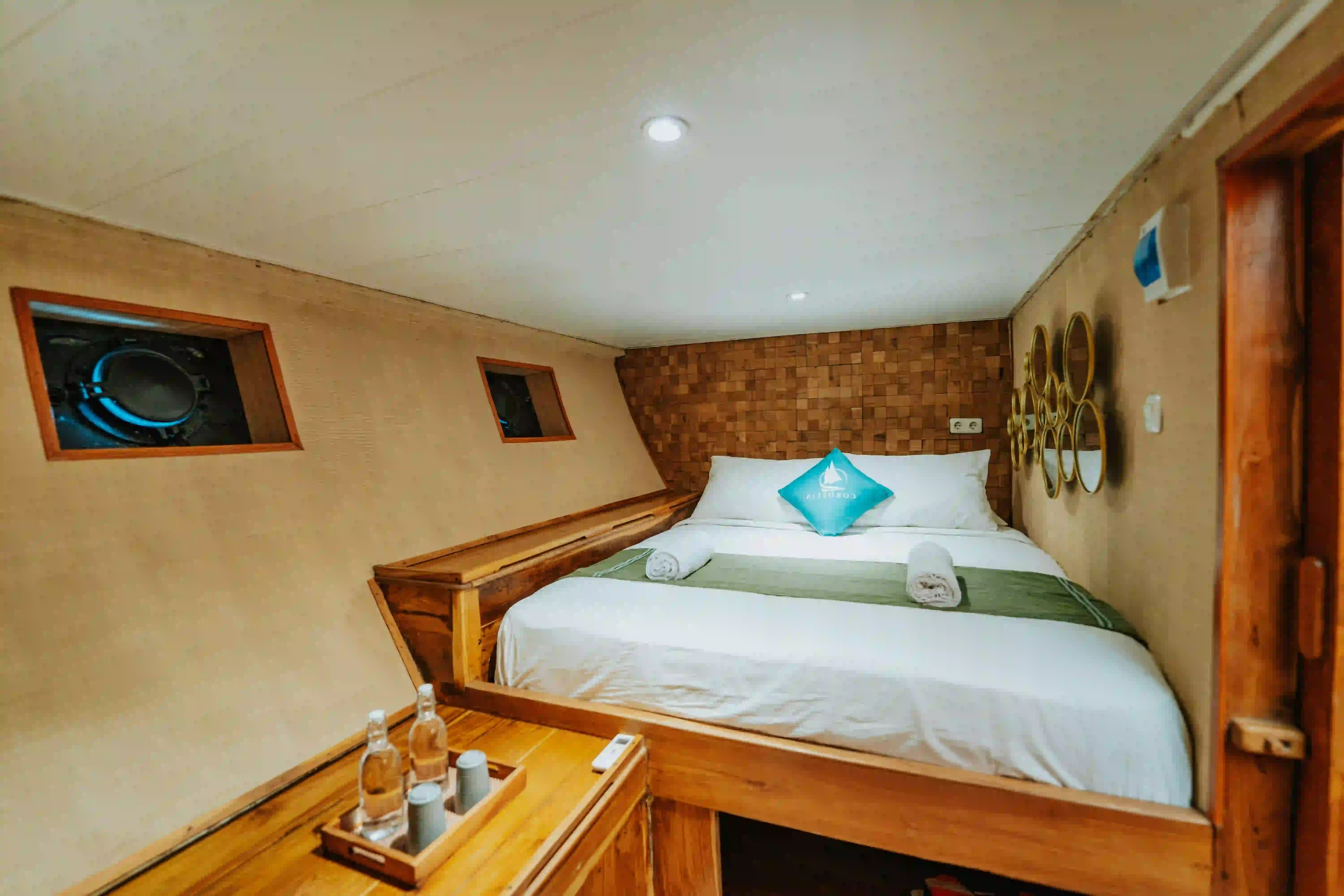
Power is the problem people plan for and salt is the problem that actually ruins equipment. Three days of tender transfers, spray on transit legs and wet hands after every snorkel stop is a harder environment than most travel. The cabin is the dry place on the boat — all eight on Aura Suci are air-conditioned, which also means they run drier than the deck — so store bodies and lenses there between stops rather than leaving them out in a bag.
Two habits are worth adopting from day one. Rinse nothing with fresh water unless the manufacturer says you can, but do wipe salt off with a damp cloth and dry it before it crystallises. And carry the camera to shore inside a dry bag, closed, even for the two-minute tender ride to the Padar trailhead — the water that reaches your kit almost always comes over the side of a tender, not from the sky. Silica gel packets in the camera bag cost nothing and earn their place on a boat where humidity never drops.
A note on drones
Drone flying inside Komodo National Park is restricted and permission-based rather than free, and at least one competitor page quotes a Rp 1,000,000 drone permit figure. Treat any number you read as needing confirmation with the park authority or through your operator before you travel, and do not assume that owning a drone means flying it at Padar. This is a rule that gets enforced.
Frequently asked questions
What plug type do I need on a Komodo liveaboard?
Indonesian mains is 230 V at 50 Hz with Type C and Type F sockets — the two-round-pin European plug. Travellers from the UK, US, Japan or Australia need an adapter. Most camera and laptop chargers are already dual-voltage at 100–240 V.
Is there power in the cabins all night?
The boat runs air conditioning in all eight cabins, which means continuous generation rather than short generator windows. The exact socket count per cabin and the generator schedule are not published, so confirm both with the reservations desk before departure.
How many camera batteries should I bring?
Three or four for a mirrorless or DSLR body, and the same for an action camera. Sunrise on Padar and dusk at Kalong are the two heaviest shooting sessions of the trip and they sit at opposite ends of the same long day.
Can I use a hairdryer or other high-draw appliance?
Ask first. High-draw appliances on a boat’s electrical system are a different proposition from charging a phone, and the answer varies by vessel. Assume no until the crew tells you otherwise.
Can I fly a drone in Komodo National Park?
Not freely. Drone use inside the park is restricted and permission-based, and figures quoted online for permits should be confirmed with the park authority or through your operator before you travel rather than treated as settled.
Check dates and hold a cabin
Aura Suci runs open-trip departures every Friday and whole-boat charters year round. Aura Suci is operated and sold through Komodo Luxury, the Labuan Bajo operator behind this boat since 2015. Bookings, cabin plans and the current rate sheet come from the reservations desk: WhatsApp +62 811 3823 875 or sales@komodoluxury.com. A booking is held with a 50% deposit (non-refundable) and the balance falls due 30 days before departure.
Every figure on this page was checked against the operator rate card and the official fee regulation on 1 August 2026. Rates move with season, fuel and exchange rate — ask for a written quote before you transfer anything.
Read next on this site
From the journal
More reading
 Sailing & Charters
Shared Luxury Cabin or Whole-Boat Charter in Komodo: The Honest Cost Trade-Off
Whole-boat charter in Komodo runs USD 1,800–30,000 per night, and the published market median is USD 7,225 per night across…
Read more Sailing & Charters
Do Boats Stop Running in Komodo During the Monsoon?
There is no closed season in Komodo National Park. What actually happens December to March: reduced fleet, dry-dock maintenance, weather…
Read more Sailing & Charters
Is Komodo Worth Visiting in January During the Rainy Season?
January is the wettest, roughest month in Komodo — and the peak of manta season with the lowest berth prices.…
Read more
Sail Komodo with Aura Suci
Eight en-suite cabins, every one with its own balcony, and a crew who read these tides daily.