

Every Cabin With a Private Balcony: Why That Is Rare on a 30m Komodo Phinisi
Every cabin on Aura Suci opens onto its own private balcony — and on a 30-metre wooden phinisi, that is genuinely unusual. The reason is structural, not stylistic. A traditional …
- Published 16 August 2026
- Read time 8 min
Every cabin on Aura Suci opens onto its own private balcony — and on a 30-metre wooden phinisi, that is genuinely unusual. The reason is structural, not stylistic. A traditional Bulukumba-built hull was drawn as a cargo schooner: its volume sits below deck, where balconies are physically impossible, and its topsides were kept clear for working sail. Giving all eight cabins a balcony plus a private bathroom means designing the entire superstructure around the guest — accepting fewer cabins, more weight above the waterline, and less shared deck than the hull could otherwise carry. Most owners refuse that trade because more berths means more revenue per departure. Aura Suci accepted the trade at the first pencil line, which is why she carries 24 guests in eight balcony cabins where a comparable hull might pack in far more bunks with no balconies at all.
Last updated: August 16, 2026
What a Balcony Actually Costs a Shipwright
On paper a balcony looks like a bolt-on. On a wooden boat it is a chain of compromises that starts at the keel. Three of them decide everything.
Deck space is the scarcest thing aboard
Thirty metres sounds long until you subtract the foredeck, the wheelhouse, the tender stowage, the dive and snorkel gear station, the galley vents, and the alfresco dining area every guest expects on a multi-day liveaboard. What remains is a narrow strip along each side of the superstructure — and that strip is exactly what private balconies consume. One balcony is a few square metres. Eight balconies, port and starboard across two levels, is a serious share of the boat’s usable topside. A builder who wants a wide wraparound walking deck, or a second lounge, simply cannot also give every cabin its own outdoor space. Something yields.
Weight high up changes how a wooden hull behaves
Ironwood and teak are heavy, and a balcony deck with railings, doors, and framing sits well above the waterline — the worst possible place to add mass on a single wooden hull. This is why balconies are trivially common on catamarans, whose twin hulls provide enormous form stability, and rare on a phinisi, which is a monohull that answers every kilo of topside weight with ballast, beam, and careful sail-plan math below. A naval architect can absolutely make an all-balcony phinisi stable and comfortable at anchor and under way; it just has to be planned from the start rather than retrofitted onto a converted cargo hull. Retrofits are where most “balcony” promises quietly shrink into shared side decks.
The Bulukumba inheritance puts cabins below deck
The phinisi is a working ship from Bulukumba, South Sulawesi, and the standard conversion logic for tourism follows the original anatomy: the cargo hold becomes cabins, below deck. A below-deck cabin can never have a balcony — its “window” is a porthole near the waterline. For every cabin to open onto private outdoor space, every cabin must sit at deck level or above, which forces a two-level guest superstructure and shrinks the maximum cabin count. That is the honest reason “every cabin with a balcony” is rare on this class of boat: it is a decision against capacity, made before the keel is laid.
How Aura Suci Fits Eight Balconies Into Thirty Metres
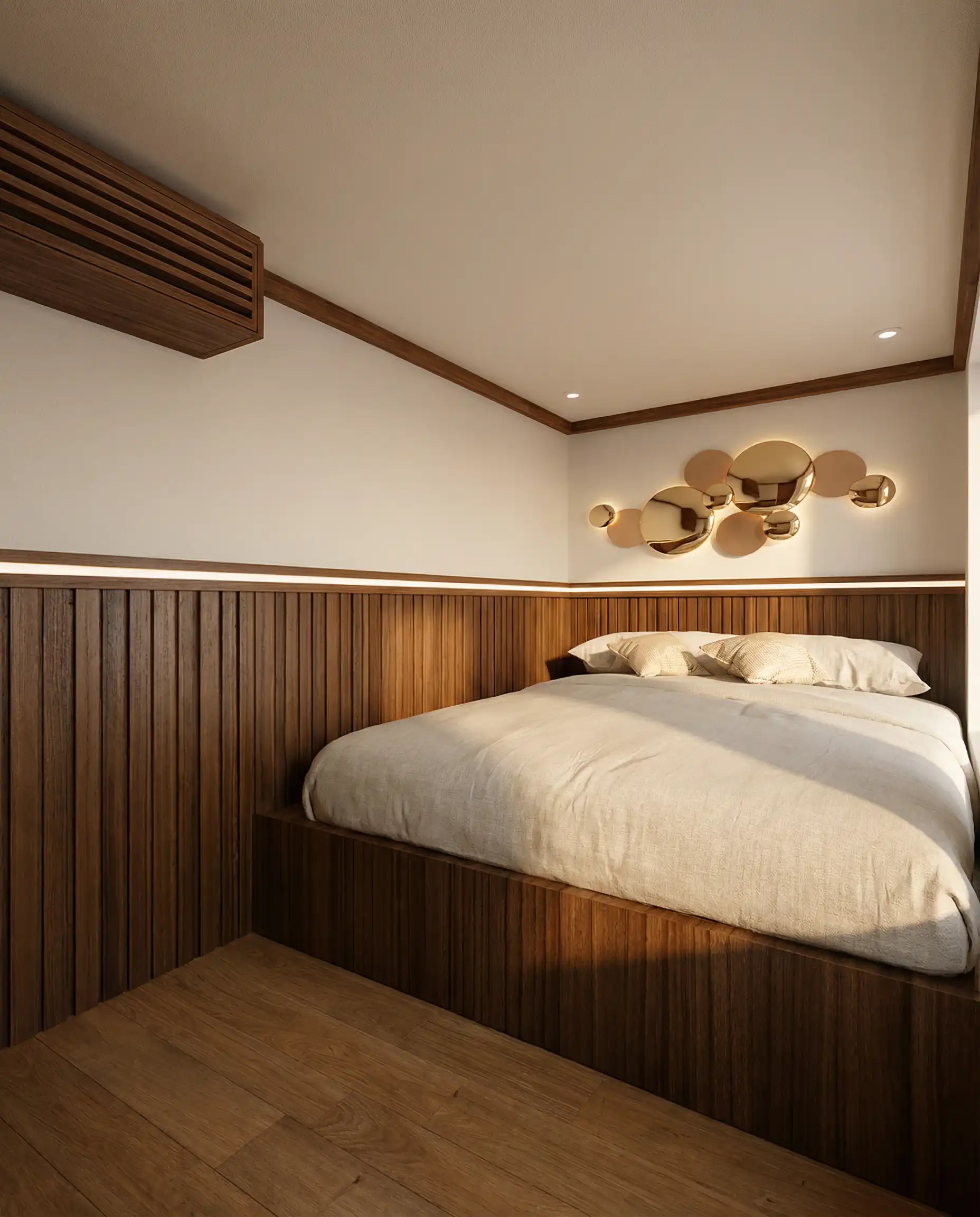
Aura Suci’s answer was to stop at eight cabins and give each one the full treatment: a private balcony and a private ensuite bathroom, across four cabin grades — including a Family Cabin sized for parents travelling with children — for a maximum of 24 guests. Capping the guest count is what makes the geometry work. Fewer cabins means each one can be wide enough for a proper balcony door and seating outside, and the shared decks still keep their dining and lounging space. She sails as the VIP wooden phinisi in the fleet of Komodo Luxury — a registered Indonesian PT under Juara Holding Group Limited with 1,500+ verified guest reviews (4.9/5) — and her full charter profile on Komodo Luxury shows the deck-by-deck cabin plan if you want to see exactly where each balcony sits. Our own specs and cabin plan page breaks down the four grades in detail.
Why the Balcony Matters in Komodo, Specifically
A balcony is pleasant anywhere. In Komodo National Park right now, it changes how the trip feels, for two very current reasons.
The visitor cap made anchorages quieter
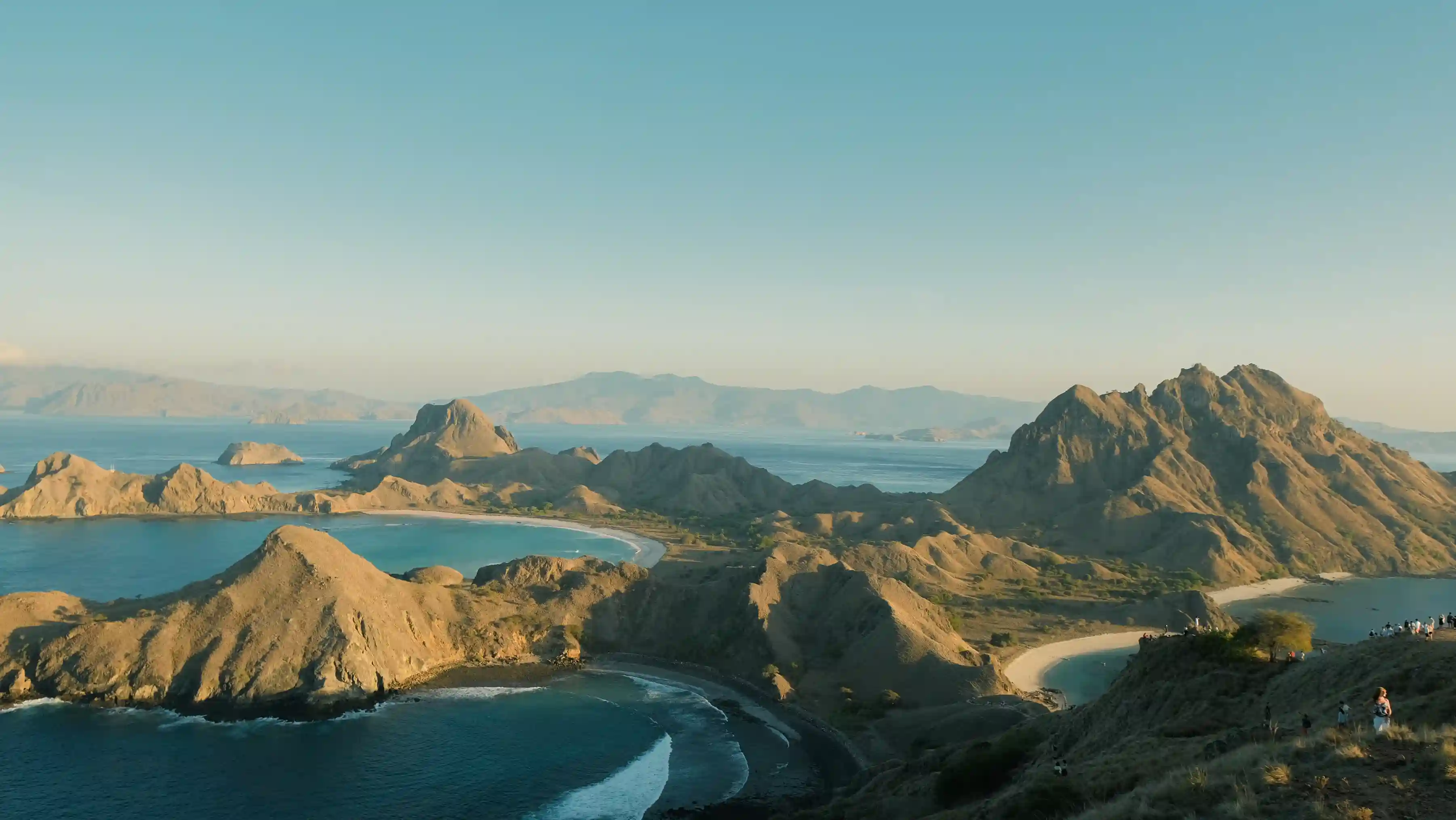
Since 1 April 2026, park authorities have limited Komodo National Park to 1,000 visitors per day. The practical effect on a liveaboard itinerary is that more of your trip happens at anchor in near-empty bays — sunrise over Padar before the day boats arrive, manta sightings off the stern, deer coming down to the beach at dusk. When the park itself is the show, a private balcony stops being a hotel-style amenity and becomes your primary seat. You watch it in a robe with coffee instead of shoulder-to-shoulder at a shared rail.
August 2026: a stress test the region passed
On 15 August 2026, a magnitude 7.7 earthquake struck the region. The recorded tsunami wave was 0.36 metres — no destructive tsunami occurred — and the park reopened the same day. Boats at anchor experienced it as little more than an odd swell. We mention this because guests ask, and because it is a fair snapshot of how sailing operations here work: conservative anchorage choices, harbour-master coordination, and itineraries that continued the following morning. Our practical blog archive covers the related questions — sea conditions by month, seasickness, and what onboard wifi realistically does in the park.
Send your dates and we will come back with live cabin availability on Aura Suci.
The Two Numbers That Matter
Aura Suci runs two formats. Shared-cabin open trips start from IDR 4,750,000 per person for the three-day, two-night itinerary — the entry point into an all-balcony boat without chartering the whole vessel. Full charters, where your group takes all eight cabins, are IDR 85,000,000 per night departing Labuan Bajo. Longer itineraries from two days up to eight nights, including the Lombok crossing, are on our duration pages, and the 2027 seasonal rates table shows how dates shift the picture. If you want to sanity-check the layout against other boats before deciding, the fleet-wide comparison at Labuan Bajo Liveaboard is the fastest way to see how few vessels in this size class offer a balcony on every cabin — and for the land side of the trip, hotels and pre-departure nights, Labuan Bajo Luxury covers the town end of the journey.
Sister Ships, Honestly Compared
Aura Suci is not the only way into this fleet, and the right boat depends on your group. Yumana, a sister vessel in the same fleet, takes a different layout philosophy, and Lady Grace — another sister vessel — suits smaller parties with her own character. If the deciding factor for you is that every single cabin, including the Family Cabin, opens onto private outdoor space with its own bathroom behind the door, that specific combination is the thing Aura Suci was built around. Compare all three; the differences are real, and they are the point of running distinct boats rather than clones.
Frequently Asked Questions
Do all eight cabins on Aura Suci really have a private balcony?
Yes. All eight cabins, across all four grades including the Family Cabin, have a private balcony and a private ensuite bathroom. There are no interior-only or porthole-only cabins aboard, which is precisely what is rare on a 30-metre wooden phinisi.
Why don’t most 30m phinisi offer balcony cabins?
Because the traditional Bulukumba hull puts cabins below deck, where balconies are impossible, and because balconies consume deck space and add weight high above the waterline. Building them for every cabin means capping the cabin count, which most operators are unwilling to do.
How much does a trip on Aura Suci cost?
Open trip places start from IDR 4,750,000 per person for the 3D2N itinerary, and full charters are IDR 85,000,000 per night from Labuan Bajo. Longer durations up to eight nights and the 2027 seasonal rates are detailed on our rates pages.
Is a balcony cabin worth it with Komodo’s visitor cap in place?
Arguably more than ever. With entry limited to 1,000 visitors per day since 1 April 2026, anchorages are quieter and more of the experience happens from the boat itself — which makes private outdoor space the most-used square metres on board.
Did the August 2026 earthquake affect Komodo liveaboard trips?
The magnitude 7.7 earthquake on 15 August 2026 produced a recorded wave of just 0.36 metres — no destructive tsunami — and the park reopened the same day. Itineraries in the park continued as normal.
Is Aura Suci a yacht or a phinisi?
She is a wooden phinisi, hand-built in the Bulukumba tradition, operated as a luxury private charter and open-trip liveaboard. The all-balcony, all-ensuite layout borrows from private yacht design, but the hull, rig, and soul are entirely phinisi.
From the journal
More reading

Komodo Open Trip 3D2N vs Private Wellness Charter (2026)
For wellness-minded travellers, the decision usually comes down to privacy versus price. A Komodo open trip 3D2N with shared cabins…
Read more
One Phinisi, 24 Guests: The 2027 Charter Math for Large Groups in Komodo
If you are looking for a Komodo phinisi for large groups, here is the direct answer: Aura Suci, a 30-metre…
Read more
Intimate Small Group Komodo Liveaboard Trips in 2027: The Cabin-Count Rule
An intimate small group Komodo liveaboard in 2027 comes down to three filters, applied in this order: choose a boat…
Read more
Sail Komodo with Aura Suci
Eight en-suite cabins, every one with its own balcony, and a crew who read these tides daily.