
- Home
- Journal
- Sailing & Charters
- What Happens on the Night of a Komodo Liveaboard?
What Happens on the Night of a Komodo Liveaboard?
Nights on a Komodo liveaboard are spent at anchor in sheltered bays, not under way — with one exception. Night one is usually Kalong, watching thousands of flying foxes leave …
- Published 1 August 2026
- Read time 9 min
- Topic Sailing & Charters
Nights on a Komodo liveaboard are spent at anchor in sheltered bays, not under way — with one exception. Night one is usually Kalong, watching thousands of flying foxes leave the mangroves at dusk. Then the boat runs three to four hours to Padar in the dark. Later nights are quiet anchorages like Siaba.
What happens on the night of a Komodo liveaboard?
People imagine a liveaboard as a boat that sails through the night. Mostly it is the opposite. A Komodo itinerary is built around anchoring in sheltered water after dark and moving during daylight, with a single planned overnight leg. Understanding which night is which is the difference between sleeping well and lying awake wondering why the engine started.
| Night | Anchorage | Under way? | What the evening looks like |
|---|---|---|---|
| Night 1 | Kalong (Pulau Kalong) | No — at anchor | The flying-fox flight at dusk, dinner on deck, early bed |
| Overnight 1→2 | Kalong → Padar | Yes, about 3–4 hours | The one planned night run, timed to reach Padar before the sunrise hike |
| Night 2 | Sheltered bay, commonly Siaba | No — at anchor | The quietest night of the trip after the longest day |
| Night 3 (on a 4D3N) | Siaba, Sebayur or a nearby bay | No — at anchor | Final evening, usually the most relaxed |
Anchorage pattern verified across operator itineraries scanned 1 August 2026. Crews change anchorages for wind and swell — the pattern is the norm, not a promise.
Kalong: the bats
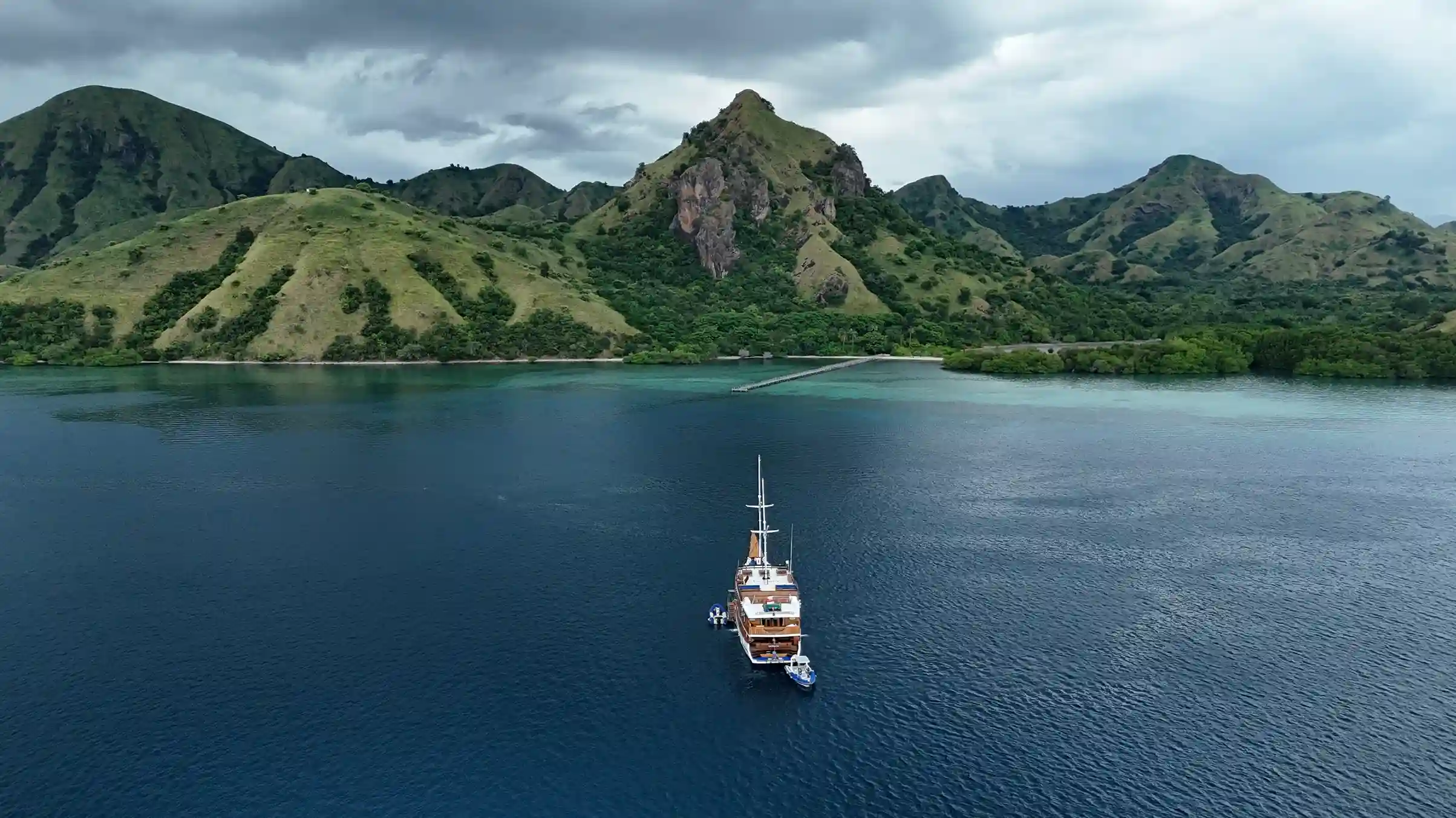
Pulau Kalong is a small mangrove island roughly an hour from Manjarite, and it is the standard first-night anchorage for one reason. At dusk, thousands of flying foxes — large fruit bats, not the small insect-eating kind — lift out of the mangroves in a continuous stream that takes fifteen or twenty minutes to pass overhead on its way to feed on Flores. Boats anchor a few hundred metres off and everyone stands on the top deck with the engine off.
It is genuinely one of the best things in the park and it happens on day one, before most guests have understood what they booked. Bring a camera with a fast lens if you have one; the light is gone within twenty minutes of the first bats.
Dinner and the evening on board
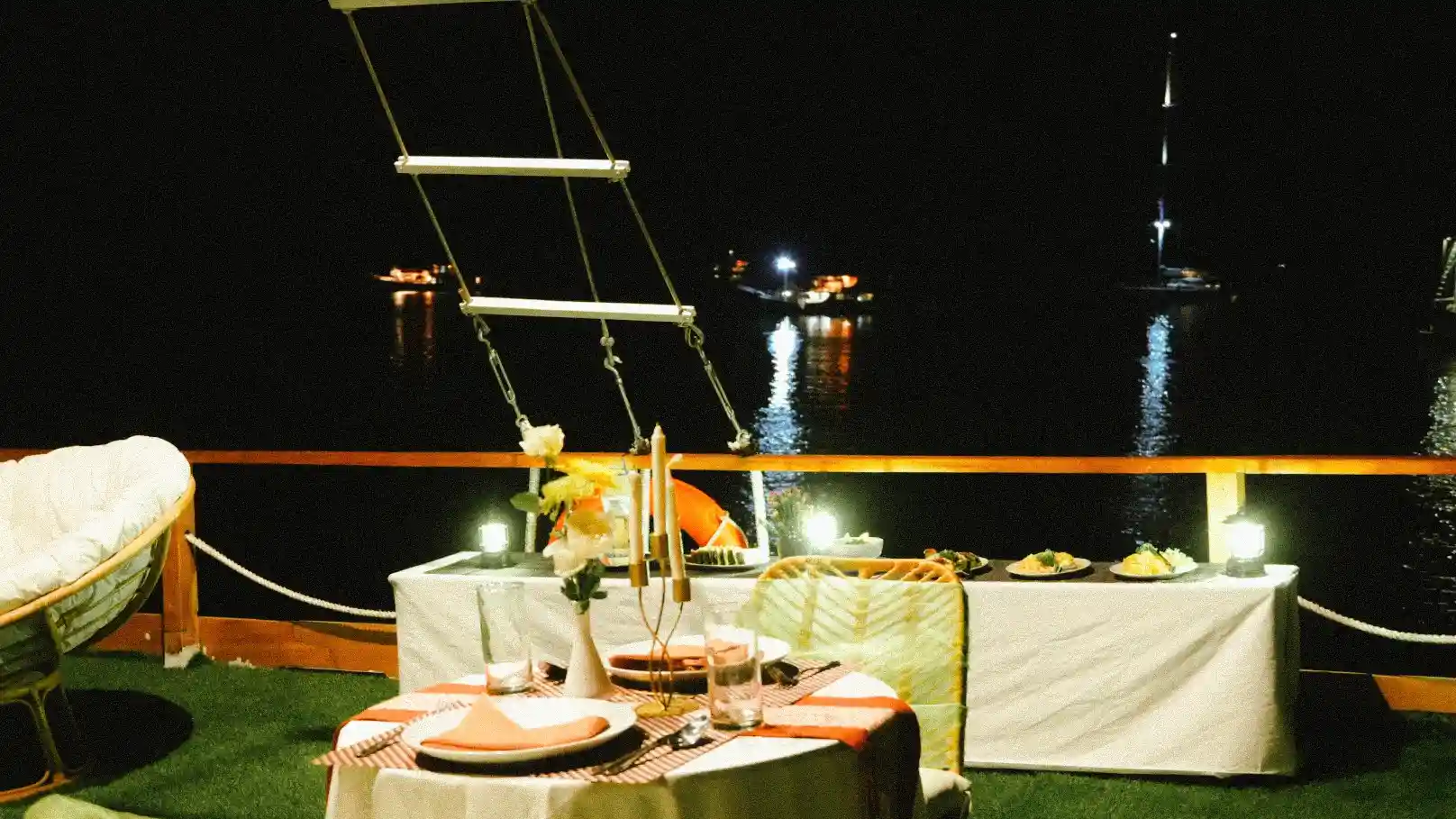
Dinner is served at anchor on the main deck, usually between 19:00 and 20:00, cooked in the galley and served buffet-style. It is the loosest part of the day: the crew has finished manoeuvring, the deck lights are on, and there is nothing scheduled until morning. There is no bar service on a standard open trip and no published drinks list, so what people drink is what they carried aboard from Labuan Bajo.
Evenings end early, and not because anyone imposes it. Day two starts before dawn for the Padar hike, and by 21:00 most of a boat is asleep.
Send your dates and we will come back with live cabin availability on Aura Suci.
The night run to Padar
This is the one leg that happens while you sleep. From the Kalong anchorage to Padar is roughly three to four hours, and the crew times it so the boat is on the Padar mooring before first light with the trailhead tender ready around 05:00 to 05:30. On a 30-metre wooden phinisi with a 6-metre beam running a Mitsubishi 8DC11 at 10–12 knots, most guests sleep through it entirely. On a slower hull the same leg either starts earlier or arrives later, and that is the practical reason cruise speed matters on a liveaboard specification sheet.
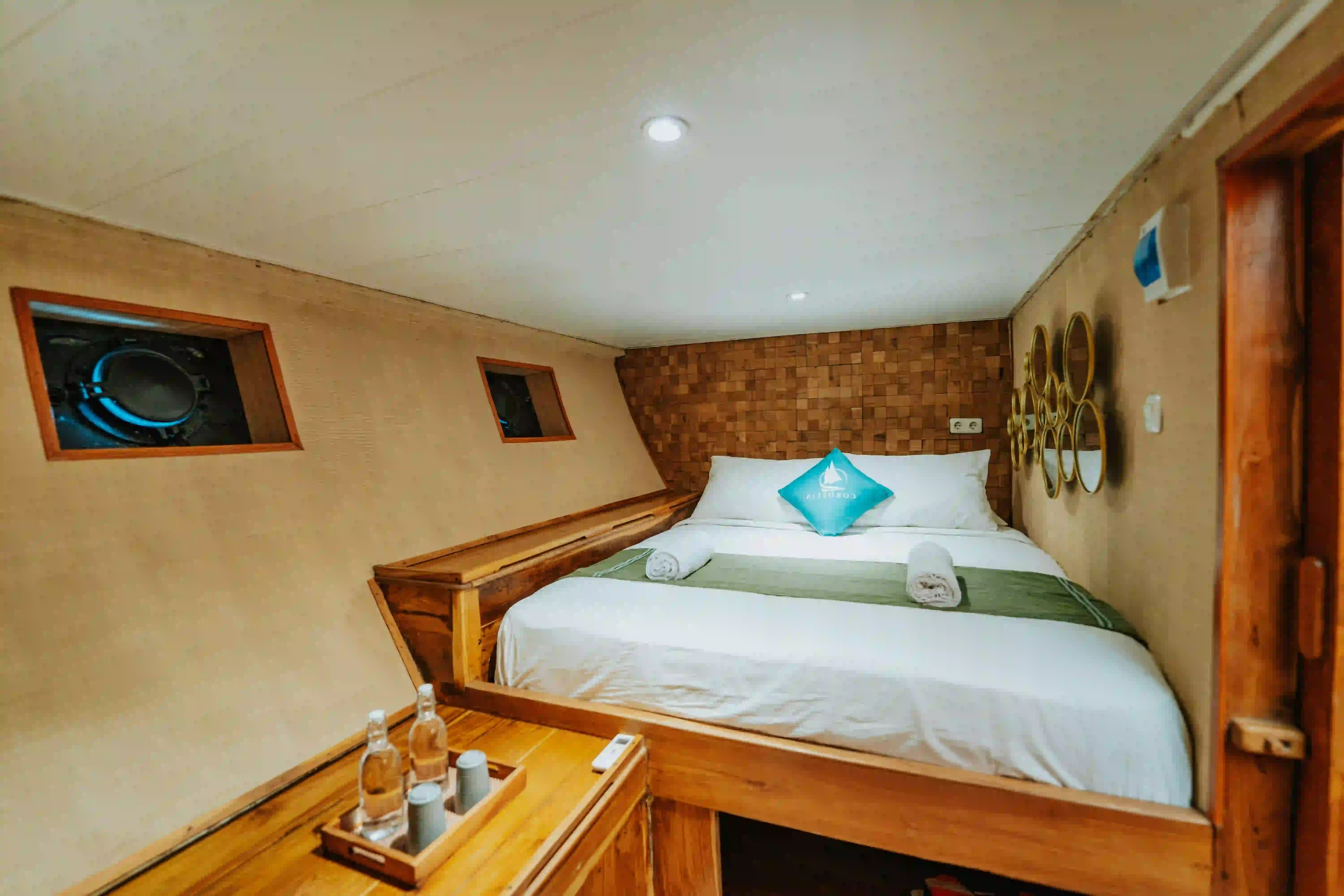
If you are a light sleeper, ask for a cabin away from the engine and towards the middle of the boat, where motion is least. All eight cabins on Aura Suci have air conditioning, a private bathroom, a private balcony and a sea view, so the trade-off is position rather than quality.
What the anchorages are like
| Anchorage | Why boats use it | Water |
|---|---|---|
| Kalong | The flying-fox flight; sheltered mangrove bay | Murky, mangrove-fed — an anchorage, not a swim stop |
| Siaba Besar | Sheltered bay, calm all night, easy morning snorkel | 5–18 m, light to moderate current, turtles and macro life |
| Manjarite | Protected from wind, close to the day-one route | Sheltered snorkelling bay |
| Sebayur | Close to Labuan Bajo, useful as a final night | 5–30+ m, soft coral, gentle except at the point |
Stars, phones and the dark
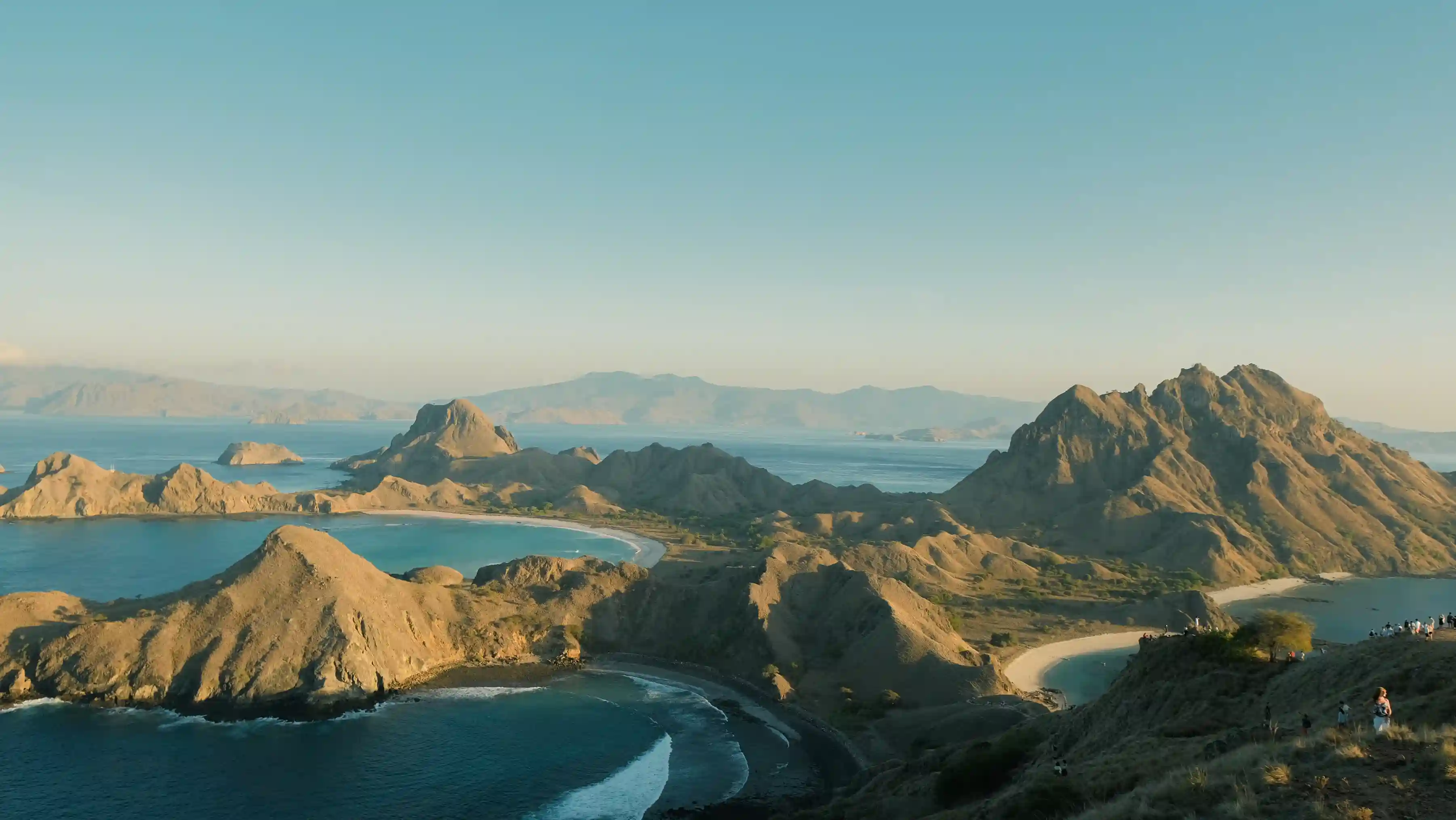
There is no light pollution anywhere in the park. On a clear night at Siaba the sky is the second thing people photograph after the bats. Mobile signal is patchy to absent at most anchorages and there is no published coverage map for the park, so plan for no connection rather than hoping for one — tell people at home before you board, not from the anchorage.
Practical things that make the nights better
- A head torch. Decks are dark, the Padar trailhead at 05:00 is darker, and holding a phone torch while climbing is how ankles get twisted.
- A light layer. Air temperature drops on deck after dark and the wind on a moving boat is cooler than the anchorage.
- Earplugs. Cheap insurance for the one night the engine runs.
- Pack for the morning before bed. Nobody enjoys assembling shoes and a camera at 04:45 in a shared cabin.
- Sleep on the top deck if you want to. Plenty of guests do on a calm night at anchor; ask the crew first.
Frequently asked questions
Does the boat sail all night on a Komodo liveaboard?
No. Almost every night is spent at anchor in a sheltered bay. The exception is the leg from the Kalong anchorage to Padar — roughly three to four hours, run overnight or pre-dawn so the boat is in position for the sunrise hike.
What is the Kalong bat flight?
At dusk, thousands of flying foxes lift out of the mangroves on Pulau Kalong and stream overhead toward Flores to feed. Boats anchor a few hundred metres off with the engine down and watch from the top deck. It usually lasts fifteen to twenty minutes.
Can I sleep on deck?
On a calm night at anchor many guests do, and crews are usually happy to arrange it. Ask first, because it depends on the night, the weather and where the crew needs working space.
Is it noisy at night on a phinisi?
At anchor, no — the engine is off and the loudest sound is water against a wooden hull. During the single overnight run there is engine noise; a cabin mid-ship and away from the engine is the quietest position, and earplugs solve the rest.
What time does dinner happen?
Usually between 19:00 and 20:00 at anchor, cooked in the galley and served on the main deck. Evenings finish early because day two starts before dawn for the Padar sunrise hike.
Is there phone signal at the anchorages?
Patchy at best and absent at several. There is no published coverage map for the national park, so plan on being offline for the trip and tell people at home before you board rather than expecting to message from the anchorage.
Check dates and hold a cabin
Aura Suci runs open-trip departures every Friday and whole-boat charters year round. Aura Suci is operated and sold through Komodo Luxury, the Labuan Bajo operator behind this boat since 2015. Bookings, cabin plans and the current rate sheet come from the reservations desk: WhatsApp +62 811 3823 875 or sales@komodoluxury.com. A booking is held with a 50% deposit (non-refundable) and the balance falls due 30 days before departure.
Every figure on this page was checked against the operator rate card and the official fee regulation on 1 August 2026. Rates move with season, fuel and exchange rate — ask for a written quote before you transfer anything.
Read next on this site
From the journal
More reading
 Sailing & Charters
Shared Luxury Cabin or Whole-Boat Charter in Komodo: The Honest Cost Trade-Off
Whole-boat charter in Komodo runs USD 1,800–30,000 per night, and the published market median is USD 7,225 per night across…
Read more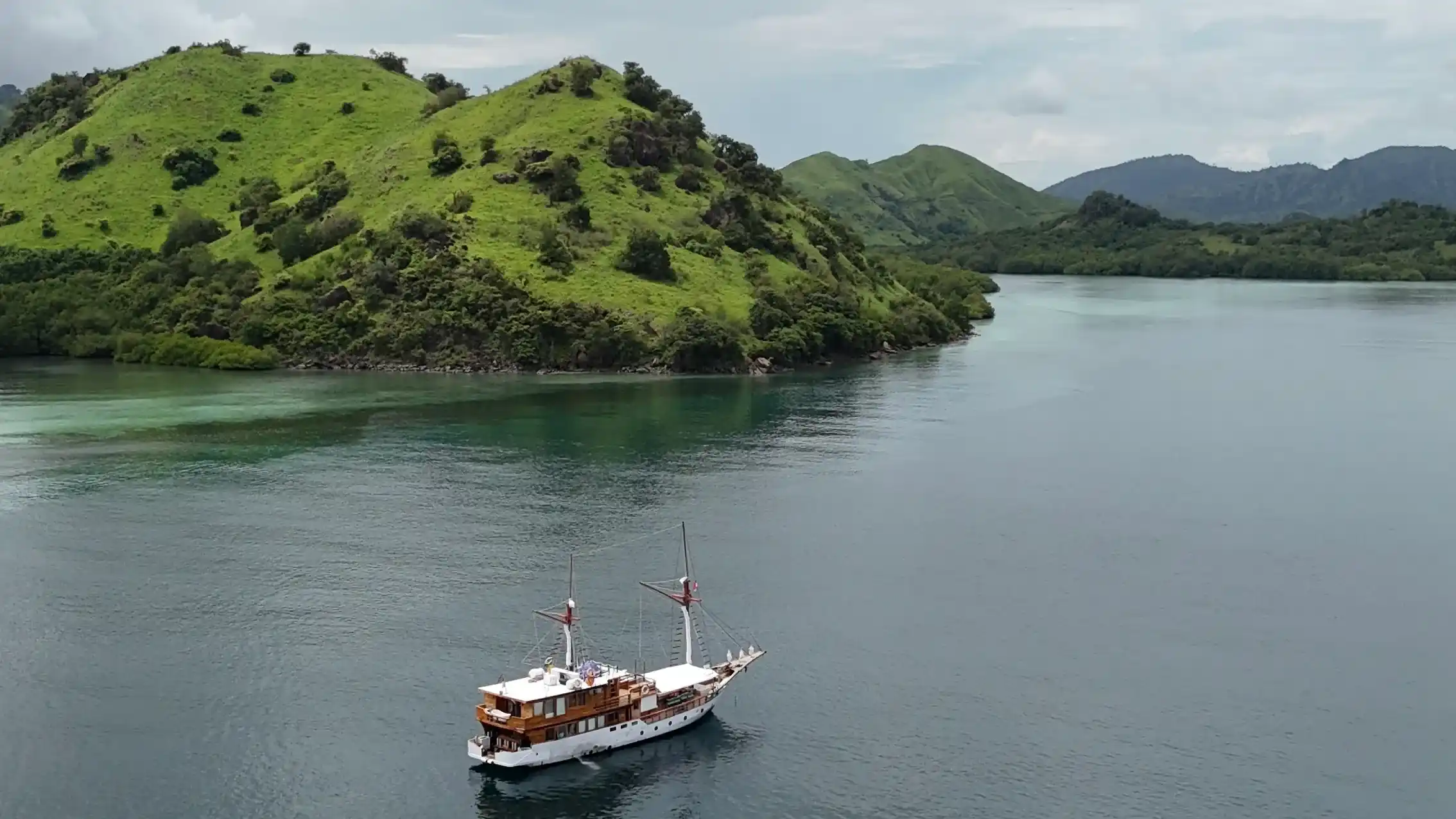 Sailing & Charters
Do Boats Stop Running in Komodo During the Monsoon?
There is no closed season in Komodo National Park. What actually happens December to March: reduced fleet, dry-dock maintenance, weather…
Read more Sailing & Charters
Is Komodo Worth Visiting in January During the Rainy Season?
January is the wettest, roughest month in Komodo — and the peak of manta season with the lowest berth prices.…
Read more
Sail Komodo with Aura Suci
Eight en-suite cabins, every one with its own balcony, and a crew who read these tides daily.