
- Home
- Journal
- Komodo in November & December: Why the Low Season Is the Quiet Escape Nobody Books (But Should)
Komodo in November & December: Why the Low Season Is the Quiet Escape Nobody Books (But Should)
November and December are Komodo's quietest sailing months: shared 3D2N trips still depart from Labuan Bajo, bays that hold ten boats in August sit nearly empty, and low-season rates run …
- Published 17 July 2026
- Read time 6 min
November and December are Komodo’s quietest sailing months: shared 3D2N trips still depart from Labuan Bajo, bays that hold ten boats in August sit nearly empty, and low-season rates run roughly USD 350–500 per person. Expect calm mornings, occasional afternoon rain, and — in late December — the possibility of rougher seas.
The season everyone skips, and what they miss
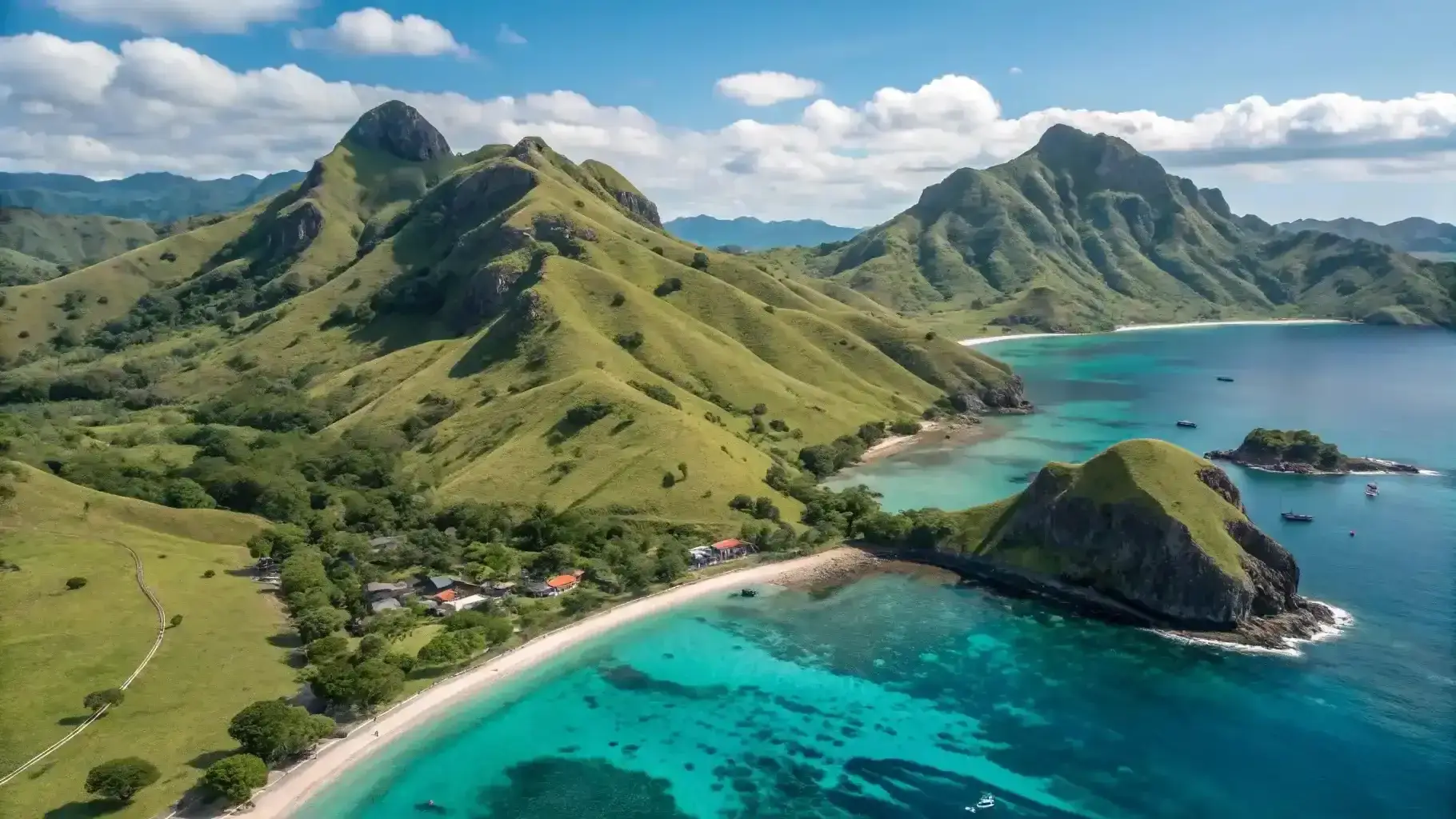
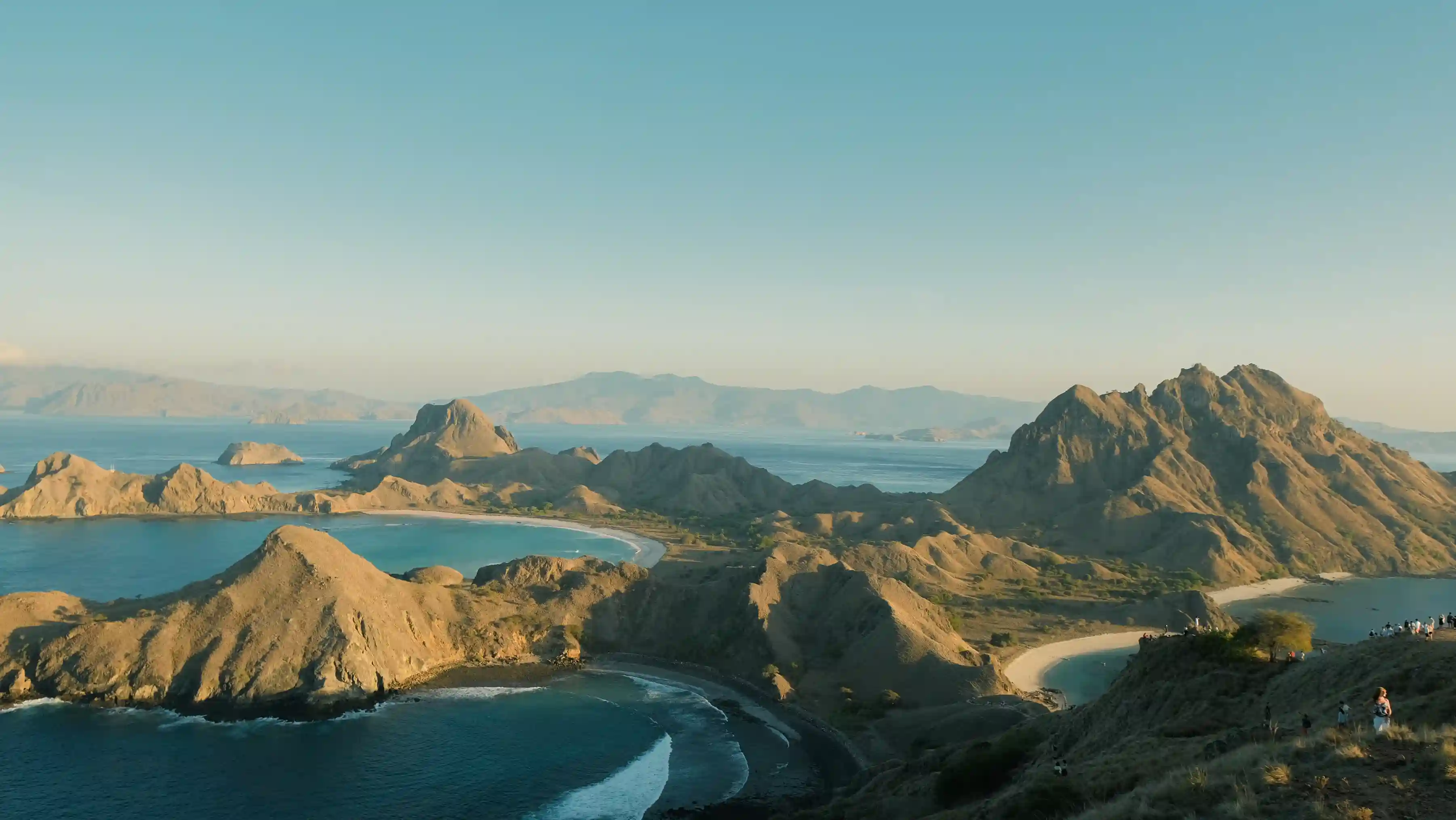
Ask any crew who has worked these waters for a few years and they will tell you the same thing: the park does not close in November. The dragons do not migrate. Padar’s three bays do not change color. What changes is the number of people looking at them. In August, the viewpoint queue on Padar can feel like a stadium stairwell at half-time. In late November, you can sit on the top step for twenty minutes and hear nothing but wind.
That is the honest trade of a komodo low season trip in November or December. You give up the guarantee of bone-dry afternoons, and in exchange you get the national park close to how it looked before it became famous. For a certain kind of traveler — the one who is tired, over-scheduled, and quietly desperate for a few days without a phone signal — that trade is not a compromise. It is the whole point.
Honest weather, month by month
Let’s not romanticize it. The dry season in Komodo runs April through November. August and September are peak dry: reliable sun, strong savanna golds, and the biggest crowds of the year. October is the shoulder — still mostly dry, thinning boat traffic, hills starting to soften. November is transition: mornings are typically clear and calm, with rain arriving in short afternoon bursts that pass through and leave the air washed clean. December continues that pattern, and by late December the seas between islands can get rougher — crews watch the forecast daily and will adjust routes when they need to.
What this means in practice: your sunrise trek up Padar in November is very likely dry. Your mid-afternoon might involve reading under cover on deck while a squall moves across Flores. Nobody who has actually sailed these months calls that a ruined trip. They call it a rhythm.
The accidental wellness retreat
Here is something the brochures rarely say out loud: a low-season liveaboard is the closest thing Indonesia offers to a floating digital detox. Signal disappears within an hour of leaving Labuan Bajo harbor. There is no lobby, no schedule pinging your watch, no option to “quickly check one thing.” There is a deck, the water, and the day’s route.
Guests who board in November tend to fall into the same pattern by day two. Up before six, because sunrise over Gili Lawa is better than any alarm. Coffee on the bow. A slow trek, a long swim, a nap nobody apologizes for. Some travelers now search specifically for a komodo wellness retreat boat, and the truth is you do not need a dedicated yoga charter to get the effect — an empty bay and a phone with no bars do most of the work. Sunrise stretching on the foredeck of a phinisi, with Padar silhouetted behind you and not a single other mast in frame, is a kind of therapy that no studio in Canggu can reproduce.
The snorkeling holds up too. Visibility in November is generally still good on the classic sites — Kanawa, Taka Makassar, Manta Point — and manta encounters actually improve as the plankton-rich transition months begin. Fewer fins in the water means calmer animals and longer encounters.
Send your dates and we will come back with live cabin availability on Aura Suci.
What a low-season shared trip actually costs
This is where the quiet months reward you twice. The best-selling format in Komodo is the shared 3D2N open trip — three days, two nights, cabin-by-cabin booking, full itinerary through the park. In peak season these cabins sell out weeks ahead. In November and December, operators release genuine komodo trip low season deals to fill departures, and shared cabins typically land in the USD 350–500 per person range depending on cabin class and vessel, with mid-range and premium cabins sitting roughly USD 500–800. Private charters follow the same logic, often 15–25% below their peak-season rates.
The park entrance fee of IDR 650,000 per person applies year-round — check whether your package includes it before comparing prices. Booking mechanics are standard across serious operators: a 50% deposit secures your cabin, with the balance due 14 days before departure.
Choosing the right boat for the quiet months
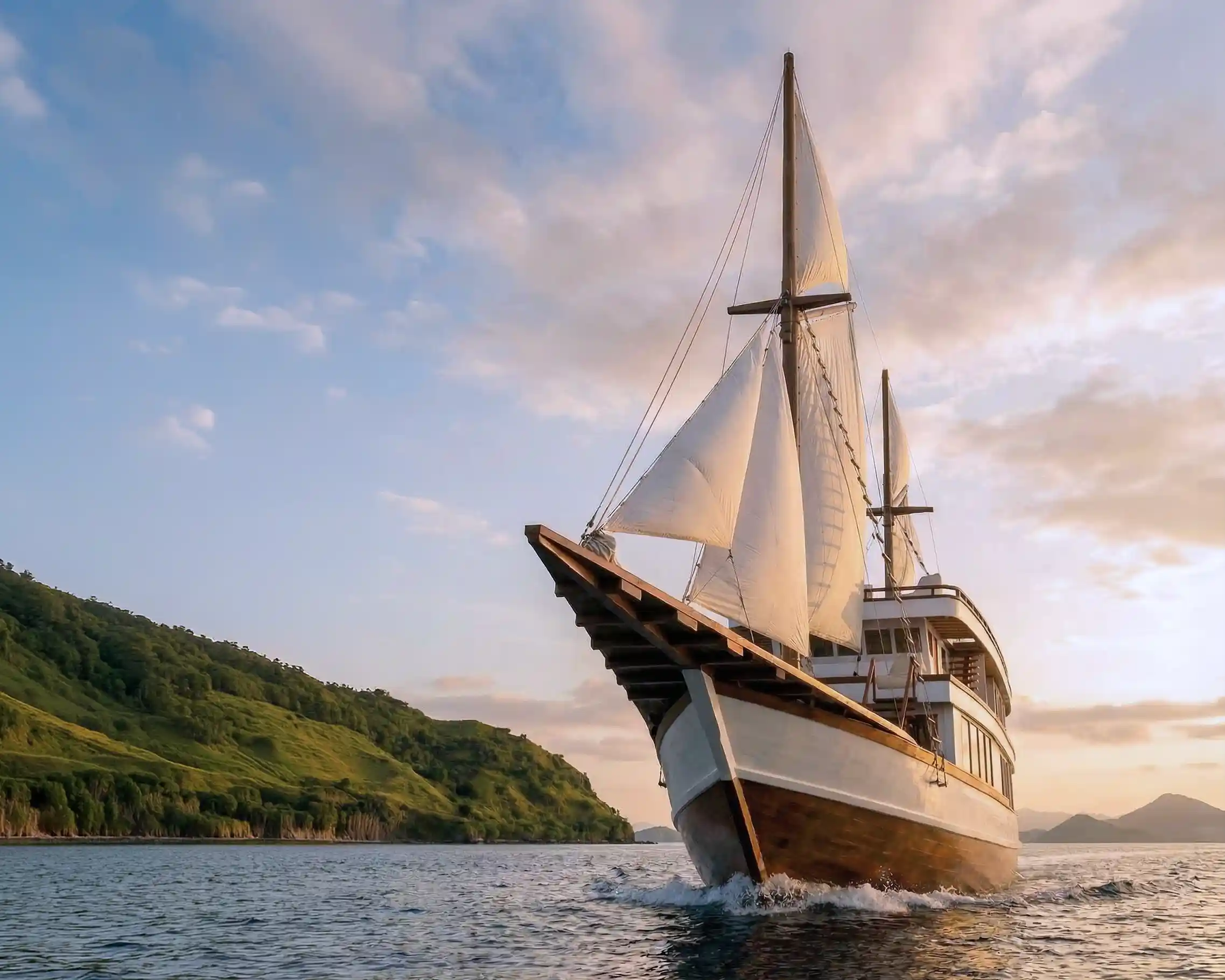
Low season is when the vessel matters most. On a blue-sky August day, almost any boat feels good. In November, you want covered outdoor space, a saloon you would actually sit in during a passing shower, and a crew that reads weather rather than just following a fixed route. This is where sailing with an established fleet pays off. The Aura Suci was built for exactly this kind of slow, restorative sailing — a phinisi with generous deck space and cabins designed for guests who came to rest, not just to tick off islands.
She sails as part of the fleet run by Komodo Luxury, the Labuan Bajo operator that has been running these waters since 2015 and now operates nine owned vessels plus vetted partner vessels across every class, from well-reviewed boats like Ayvara and Malca up to the Komodo Signature flagship, rated the best luxury phinisi for 2026. Fleet depth matters in the transition months: if conditions shift, an operator with seventeen boats and a decade of local weather knowledge has options that a single-boat outfit simply does not.
Is November–December the quiet time to visit Komodo? A quick reality check
If your priority is guaranteed sun and golden savanna photos, book August or September and accept the crowds. If your priority is space, silence, mantas, and meaningful savings — and you can live with an afternoon shower and a flexible attitude in late December — then yes, this is the quiet time to visit Komodo, and arguably the most underrated window on the calendar. The 2026 low season still has open departures; you can browse dates and current availability on Komodo Luxury’s official site, or go straight to the shared 3D2N sailing departures to see what is left for November and December.
Questions move fastest on WhatsApp at +62 811-3823-875, or by email at sales@komodoluxury.com — the team responds in English, French, Italian and German, since most guests these months fly in from Europe, the US and Australia.
Frequently Asked Questions
Will rain ruin a Komodo trip in November or December?
Almost never. Rain in these months typically arrives as short afternoon showers, while mornings — when the treks and best snorkeling happen — stay mostly clear. Late December can bring rougher seas between islands, so experienced crews monitor forecasts daily and adjust routes. Pack a light rain layer and keep your plans flexible on the final days of the year.
How far in advance should I book a low-season cabin?
Two to four weeks is usually enough in November and early December, which is part of the low season’s charm. The exception is the Christmas–New Year window, when demand spikes sharply despite the season — those departures behave like peak dates and are best secured one to two months out.
From the journal
More reading

Komodo Open Trip 3D2N vs Private Wellness Charter (2026)
For wellness-minded travellers, the decision usually comes down to privacy versus price. A Komodo open trip 3D2N with shared cabins…
Read more
Every Cabin With a Private Balcony: Why That Is Rare on a 30m Komodo Phinisi
Every cabin on Aura Suci opens onto its own private balcony — and on a 30-metre wooden phinisi, that is…
Read more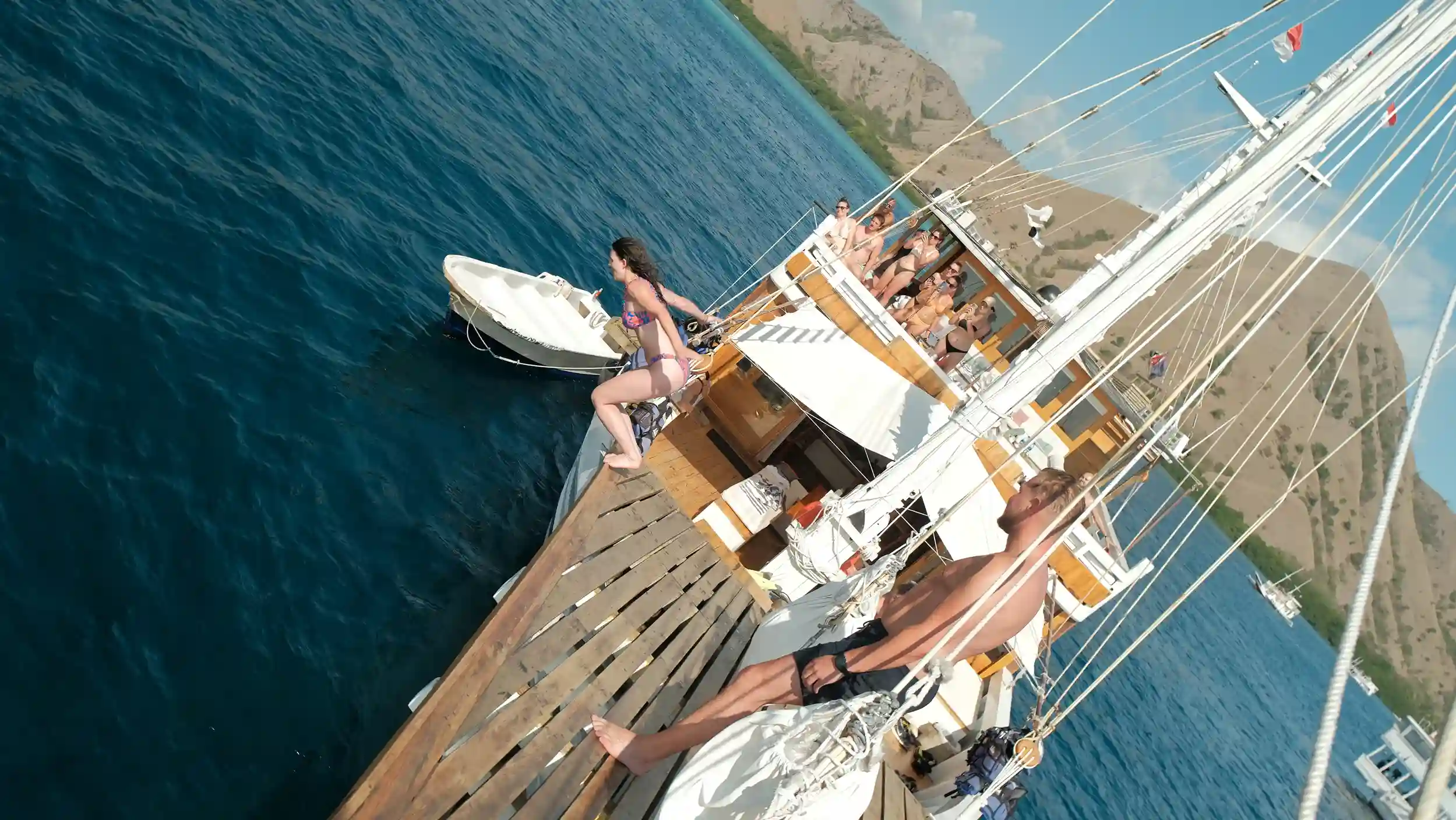
One Phinisi, 24 Guests: The 2027 Charter Math for Large Groups in Komodo
If you are looking for a Komodo phinisi for large groups, here is the direct answer: Aura Suci, a 30-metre…
Read more
Sail Komodo with Aura Suci
Eight en-suite cabins, every one with its own balcony, and a crew who read these tides daily.