

- Home
- Journal
- Sailing & Charters
- Is Komodo Worth Visiting in January During the Rainy Season?
Is Komodo Worth Visiting in January During the Rainy Season?
Yes, if mantas are your priority and your schedule has slack. January sits in the northwest monsoon: the roughest seas of the year, real rain and genuine cancellation risk — …
- Published 1 August 2026
- Read time 8 min
- Topic Sailing & Charters
Yes, if mantas are your priority and your schedule has slack. January sits in the northwest monsoon: the roughest seas of the year, real rain and genuine cancellation risk — but also the peak of manta season and the lowest berth prices. Book with a written reschedule policy and spare days.
Is Komodo worth visiting in January during the rainy season?
January is the month the guides tell you to avoid and the divers keep going anyway. Both positions are defensible, because January is genuinely two different propositions depending on why you are coming.
What January is: the heart of the northwest monsoon. Rain, the roughest seas of the Komodo year, variable visibility, part of the fleet hauled out for maintenance, and a real chance that a stop or a whole departure moves for weather. What January also is: the peak of manta season, the cheapest berths of the year, the emptiest anchorages, and a green, dramatic version of the islands that the dry-season crowd never sees.
| Factor | January | April – June, September – November |
|---|---|---|
| Sea state | Roughest of the year; monsoon swell | Calmest of the year |
| Rain | Frequent, often in heavy short bursts | Occasional |
| Visibility underwater | Variable | Best of the year, 15–30 m |
| Manta density | Peak season — plankton-rich water | Present year round |
| Berth prices | Lowest of the year | Shoulder |
| Crowds | Lowest | Moderate |
| Fleet availability | Reduced; some boats in maintenance | Full fleet |
| Weather cancellation risk | Real — plan for it | Low |
| Landscape | Green and dramatic | Drier, golden hillsides |
Seasonal profiles compiled from floresislandtravel.com, divehappy.com and operator scheduling patterns, read 1 August 2026.

The manta argument, which is the real one
Manta rays are in Komodo all year — Karang Makassar, the shallow drift site also called Manta Point, holds them at 8–18 metres with gentle to moderate current in every month. What changes between December and March is density. Monsoon water carries far more plankton, plankton is what mantas feed on, and the cleaning stations concentrate them accordingly. Manta Alley in the south, at 5–25 metres with moderate to strong current, has produced reported aggregations of 20 to 50-plus animals on good days.
If mantas are the single reason for the trip, January is not the compromise month. It is the right month, and everything else is the price you pay for it.
What January actually costs you
- Comfort on the crossings. The Kalong-to-Padar overnight leg — roughly three to four hours — is the most exposed part of the route and the least pleasant in monsoon swell. Hull size matters more in January than in any other month: 30 metres with a 6-metre beam is a very different night from a small boat.
- Certainty. Stops get reordered, dropped or replaced with sheltered alternatives. A whole departure can move.
- Choice. A reduced fleet means fewer boats and fewer cabin options.
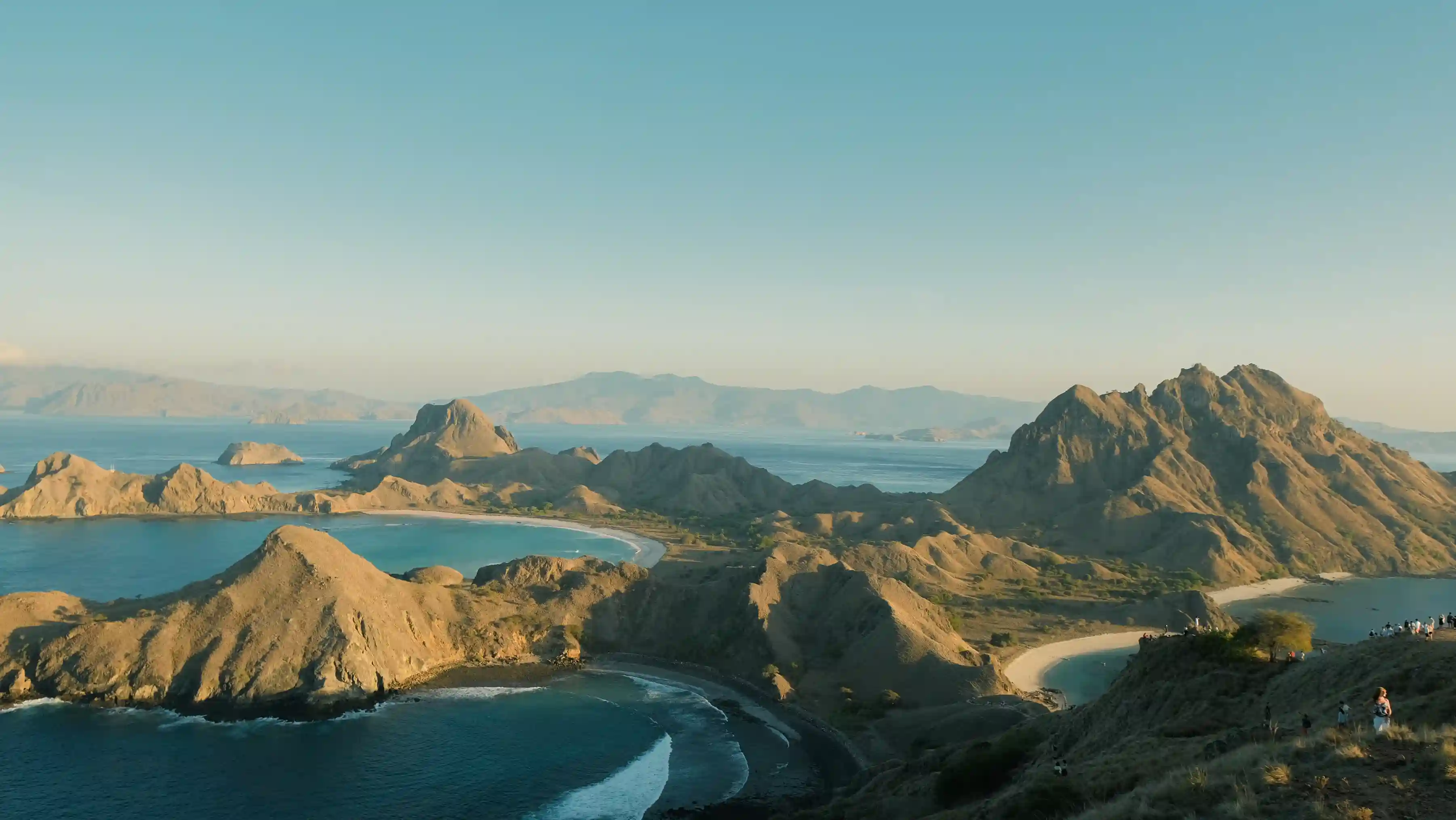
- Sunrise photography. The Padar ridge in cloud is not the postcard. Some mornings are spectacular; some are grey.
Send your dates and we will come back with live cabin availability on Aura Suci.
How to book January so the weather does not cost you
- Get the reschedule policy in writing before you pay. This is the single most important sentence in this article. Aura Suci bookings are held with a 50% deposit that is non-refundable, with the balance due 30 days before departure — so what matters is what happens to that money if the boat cannot sail.
- Build in spare days. Two buffer days either side of the itinerary turns a cancellation into an inconvenience instead of a lost trip.
- Book the bigger hull. January is not the month to save money on boat size.
- Prefer central and northern anchorages. Siaba, Manjarite and Sebayur are sheltered; the exposed southern route is a five-night-plus proposition and a harder sell in monsoon.
- Take travel insurance that covers weather disruption, and read what it actually says.
What does not change in January
The park is open, the dragons are on Komodo and Rinca, the Padar trail is walkable, and the fee is identical: Rp 250,000 per foreign visitor per visit under PP No. 36/2024, Rp 50,000 on a weekday or Rp 75,000 at weekends and holidays for Indonesian visitors. Water is warm — roughly 27–29°C in the north and centre from November to April, warmer than the June-to-September southern upwelling that drops to 21–25°C.
The verdict
Come in January if you want mantas, low prices and empty anchorages, and you can absorb a schedule change. Come in May, June, September or October if this is a once-in-a-lifetime trip with fixed flights and no room to move. Both are honest answers; the wrong one is booking January on a tight schedule and hoping.
Frequently asked questions
How much rain does Komodo get in January?
January sits in the northwest monsoon, so rain is frequent and often arrives in heavy short bursts rather than all-day drizzle. The bigger practical issue for a liveaboard is sea state on the open crossings, not the rain itself.
Are manta rays guaranteed in January?
Nothing in wildlife is guaranteed, but December to March is the recognised peak because plankton-rich monsoon water concentrates them at the cleaning stations. Karang Makassar holds mantas year round at 8–18 metres, so January improves the odds rather than creating them.
Is January cheaper for a Komodo liveaboard?
Yes — it is the lowest-demand window of the year and berth prices reflect that. Part of the fleet is also in maintenance, so choice narrows even as prices fall. Read the reschedule policy before treating the saving as a bargain.
Do trips get cancelled in January?
It happens, and you should plan for the possibility rather than hoping against it. Ask for the written weather and reschedule policy before paying a deposit, and build a spare day or two into your travel dates on either side of the itinerary.
Is Padar still worth hiking in the rainy season?
Yes, though the view is weather-dependent. The trail is a 20 to 30-minute climb on steps and uneven ground, and wet stone is slippery — proper shoes matter more in January than in any other month. Some monsoon mornings are extraordinary; some are grey.
Check dates and hold a cabin
Aura Suci runs open-trip departures every Friday and whole-boat charters year round. Aura Suci is operated and sold through Komodo Luxury, the Labuan Bajo operator behind this boat since 2015. Bookings, cabin plans and the current rate sheet come from the reservations desk: WhatsApp +62 811 3823 875 or sales@komodoluxury.com. A booking is held with a 50% deposit (non-refundable) and the balance falls due 30 days before departure.
Every figure on this page was checked against the operator rate card and the official fee regulation on 1 August 2026. Rates move with season, fuel and exchange rate — ask for a written quote before you transfer anything.
Read next on this site
From the journal
More reading
 Sailing & Charters
Shared Luxury Cabin or Whole-Boat Charter in Komodo: The Honest Cost Trade-Off
Whole-boat charter in Komodo runs USD 1,800–30,000 per night, and the published market median is USD 7,225 per night across…
Read more Sailing & Charters
Do Boats Stop Running in Komodo During the Monsoon?
There is no closed season in Komodo National Park. What actually happens December to March: reduced fleet, dry-dock maintenance, weather…
Read more Sailing & Charters
What Food Is Served on a Komodo Liveaboard?
Three cooked meals a day plus snacks are inside the fare. How galley provisioning works, how vegetarian, halal and allergy…
Read more
Sail Komodo with Aura Suci
Eight en-suite cabins, every one with its own balcony, and a crew who read these tides daily.