

Intimate Small Group Komodo Liveaboard Trips in 2027: The Cabin-Count Rule
An intimate small group Komodo liveaboard in 2027 comes down to three filters, applied in this order: choose a boat with four to eight cabins (roughly eight to sixteen guests), …
- Published 16 August 2026
- Read time 8 min
An intimate small group Komodo liveaboard in 2027 comes down to three filters, applied in this order: choose a boat with four to eight cabins (roughly eight to sixteen guests), confirm the crew roughly matches the guest list in number, and insist on an itinerary that is rewritten daily around tide, wind and crowd patterns rather than photocopied from a fixed loop. Boats that pass all three filters deliver what people actually mean by “intimate” — one dinner table where the whole group fits into a single conversation, dinghy landings that take minutes rather than half an hour, and the freedom to stay an extra hour over a reef because nobody is standing behind you with a clipboard. Everything else, from the teak joinery to the drone footage on the website, is decoration around those three numbers.
Last updated: August 16, 2026
Start With the Cabin Count, Not the Brochure
The Komodo fleet runs from two-cabin sailing boats to scheduled ships carrying twenty cabins or more, and every one of them will describe itself as personal and attentive. The number that cuts through the copywriting is cabin count. In our experience reading trip reports and sailing these waters, somewhere around eight cabins is where the character of a voyage changes. Below that line, the boat behaves like a shared house that happens to move; above it, the logistics of moving people start to dictate the day.
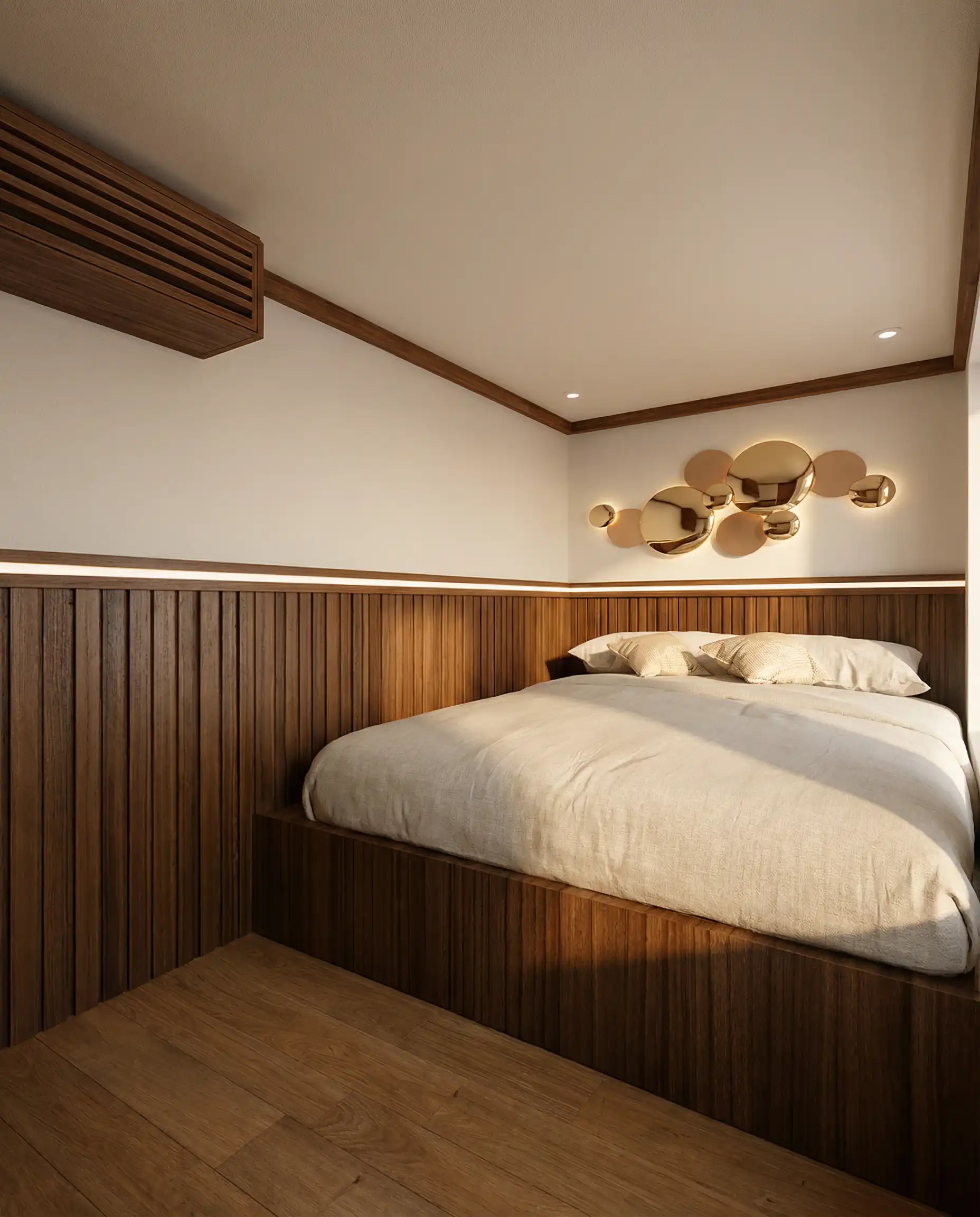
Consider what a sixteen-guest ceiling actually buys you. One dinghy run puts everyone ashore for the Padar climb, so the group summits together instead of in staggered waves. A single dive briefing covers the whole party, which means the guides can tailor it to the least experienced person aboard rather than broadcasting to a crowd. Meals arrive plated at one table instead of queued at a buffet. None of this appears on a specification sheet, yet it is the entire texture of the trip.
What a Flexible Itinerary Should Actually Mean
Plenty of operators use the word “flexible” to mean the order of stops can shuffle. On a genuinely small boat, flexibility is something more useful: the cruise director reads conditions each evening and redraws the following day around them. That is only possible when repositioning twelve guests takes ten minutes, not ninety.
The Daily Rewrite in Practice
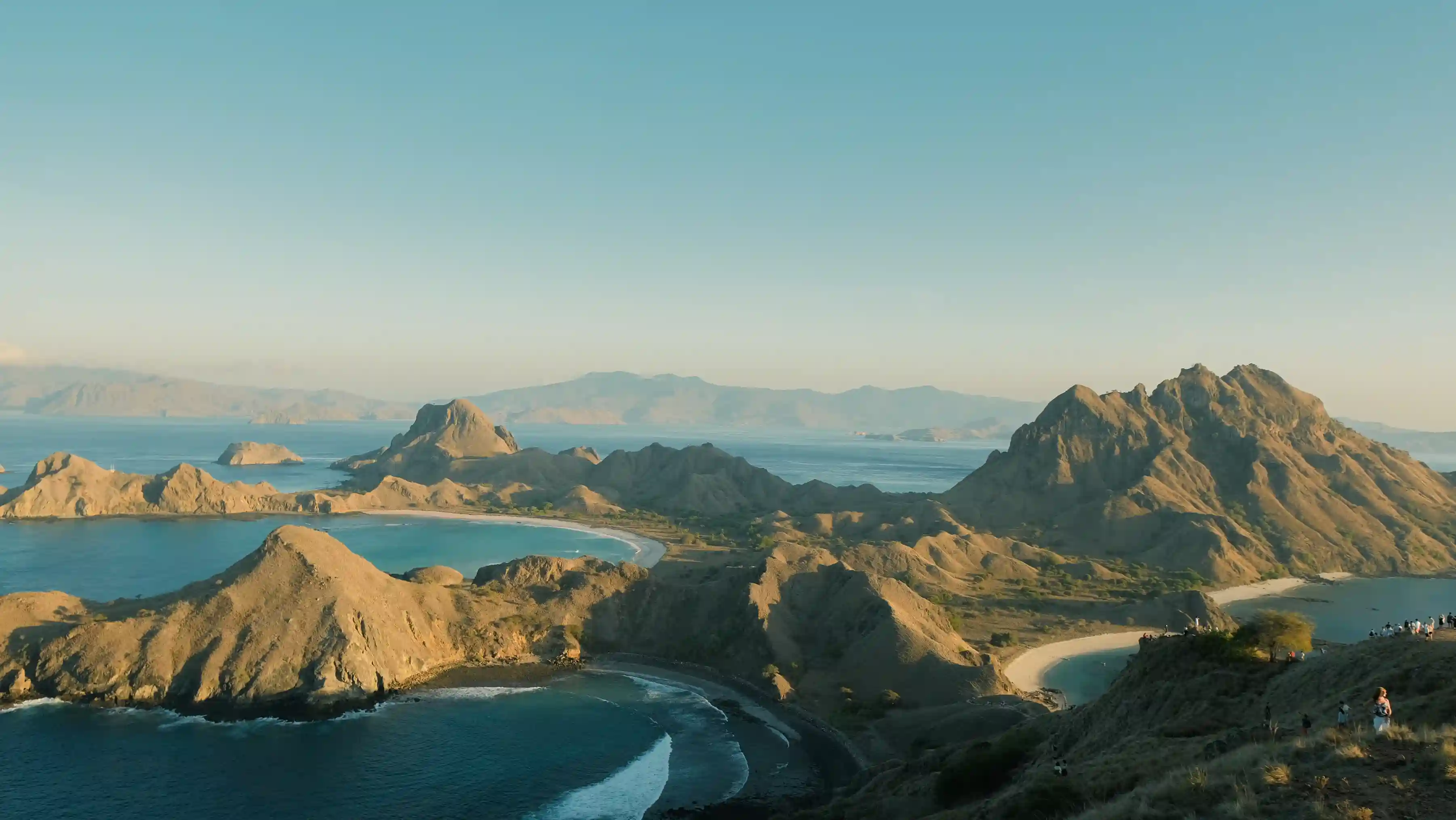
A few examples of what this looks like in the park. If the anchorage at Padar is filling with day boats, a small liveaboard slips the sunrise hike to the following morning and spends the golden hour at a sandbar the bigger ships cannot approach. If the current at Karang Makassar is running right after breakfast, the manta drift happens then, not at the hour printed on a laminated card. Pink Beach is at its quietest once the Labuan Bajo day-trip fleet turns for home, and a boat sleeping inside the park can simply wait them out. The evening bat exodus near Kalong is a matter of positioning the bow at the right angle before dusk — trivial for a nimble phinisi, awkward for a ship on a timetable.
A Rhythm, Not a Schedule
Rather than promising a fixed program, the small-boat pattern for 2027 tends to follow a loose rhythm that the crew adapts each day:
- First light: a ridge walk or empty beach before other traffic arrives
- Mid-morning: diving or snorkelling timed to slack or drift, not to the clock
- Midday: repositioning under way while guests eat and rest
- Afternoon: a second water session or a ranger-led dragon walk at Loh Buaya or Loh Liang
- Dusk: anchored somewhere chosen for the sunset line, not for harbour convenience
Ask a prospective operator to describe their version of this rhythm. If the answer is a numbered hour-by-hour table, you are looking at a scheduled cruise wearing small-group clothing.
2027, After the Quake: What Changed and What Didn’t
It would be strange to publish a 2027 planning piece without addressing the earthquake. On 15 August 2026, a magnitude 7.7 event struck the region. There was no destructive tsunami — the highest recorded wave was 0.36 metres — and the harbourmaster reopened sailing the very same day through Maklumat 05/MP-VIII/2026. Port facilities in Labuan Bajo and the anchorages inside the national park continued operating, and the 2027 season is being planned on that basis.
What the episode usefully exposed is the difference between operators with a real safety culture and those without one. For 2027, add two questions to your vetting list: how does the boat receive official maritime notices while inside the park, and how quickly can the crew communicate with guests’ families ashore if something regional happens. Small boats answered both well in August 2026 precisely because their chain of communication is short — one captain, one cruise director, a dozen guests.
Send your dates and we will come back with live cabin availability on Aura Suci.
Two Roads to the Same Quiet: Open Small Group or Full Charter
There are two honest ways to get an intimate trip. The first is joining an open departure on a boat whose maximum capacity is already small — you share the deck with a handful of strangers who tend to become dinner companions by the second night. The second is taking the whole vessel for your own party, which converts every one of the flexibility arguments above into an absolute: the itinerary answers to nobody but you. If your group already fills most of a boat’s cabins, it is worth reading up on what a full private yacht charter in Komodo actually involves before defaulting to an open departure, because the gap between the two formats is smaller than most travellers assume once a group grows past six people.
Vetting Operators When Every Website Looks Polished
Website quality has stopped being a signal in this market; nearly everyone now presents beautifully. What still separates operators is verifiable history: legal registration in Indonesia, a review record measured in the hundreds or thousands rather than dozens, and named crew who appear consistently across seasons. One name that surfaces repeatedly when we cross-check those criteria is Komodo Luxury — a registered Indonesian PT under Juara Holding Group Limited with 1,500+ verified guest reviews (4.9/5) — though the point here is the method, not any single company. Their editorial team has also published a sensible framework for weighing Komodo tour operators against each other in 2027, which is worth reading even if you end up sailing with someone else entirely. For a boat-by-boat perspective from outside any single fleet, this independent rundown of Komodo liveaboard options for 2027 is a useful second opinion to hold against whatever a sales office tells you.
Questions Worth Asking Before You Commit to a Cabin
Send these to any operator you are considering and judge the specificity of the replies:
- What is the maximum guest count, and how many crew sail with a full boat?
- Who decides the daily plan, and what would make you change tomorrow’s route?
- Where does the boat anchor overnight — inside the park or back near Labuan Bajo?
- How are dive and snorkel groups divided, and what is the guide-to-guest ratio in the water?
- How do you receive weather and harbourmaster notices while under way?
Vague answers to concrete questions are the most reliable warning sign in this industry. A crew that genuinely runs flexible small-group trips can answer all five without checking with head office.
Frequently Asked Questions
How many guests count as a small group on a Komodo liveaboard?
In practice, the intimacy line sits at around sixteen guests, which usually means four to eight cabins. Below that number, one dinghy run lands everyone together and briefings stay conversational. Above it, the trip starts to be organised around moving people rather than around the park itself.
Is it reasonable to plan a Komodo liveaboard for 2027 after the August 2026 earthquake?
Yes. The magnitude 7.7 event of 15 August 2026 produced no destructive tsunami, with the highest recorded wave at 0.36 metres, and sailing reopened the same day under Maklumat 05/MP-VIII/2026. The sensible response is not to avoid 2027 but to ask operators how they handle official maritime notices and guest communication at sea.
When should I schedule a small-group trip in 2027?
The dry season from April to November offers the most settled sailing conditions, while the shoulder months on either side see fewer boats in the park. Manta encounters are possible year-round but are most frequent in the cooler-water months. A flexible small boat extracts more from any date than a scheduled ship does from a perfect one.
Can a small-group liveaboard really change its route mid-trip?
Yes, and this is the core advantage of the format. Because repositioning a dozen guests takes minutes, the crew can move a hike, a dive or an anchorage in response to weather, currents or crowding. The itinerary you receive beforehand should be treated as a template, not a contract.
Should my group join an open departure or charter the whole boat?
If you are two to four people, an open small-group departure gives you the intimacy of a small deck plus the company of a few like-minded travellers. Once your party can fill most of a boat’s cabins, a full charter starts to make more sense, because it hands the entire daily plan to your group alone.
From the journal
More reading

Komodo Open Trip 3D2N vs Private Wellness Charter (2026)
For wellness-minded travellers, the decision usually comes down to privacy versus price. A Komodo open trip 3D2N with shared cabins…
Read more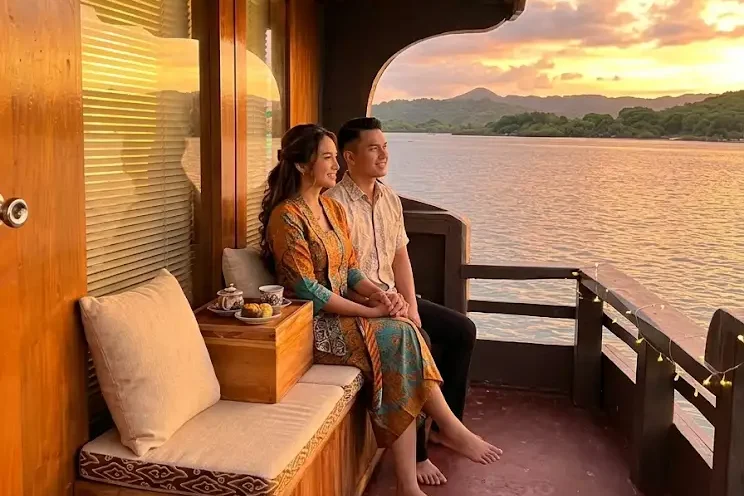
Every Cabin With a Private Balcony: Why That Is Rare on a 30m Komodo Phinisi
Every cabin on Aura Suci opens onto its own private balcony — and on a 30-metre wooden phinisi, that is…
Read more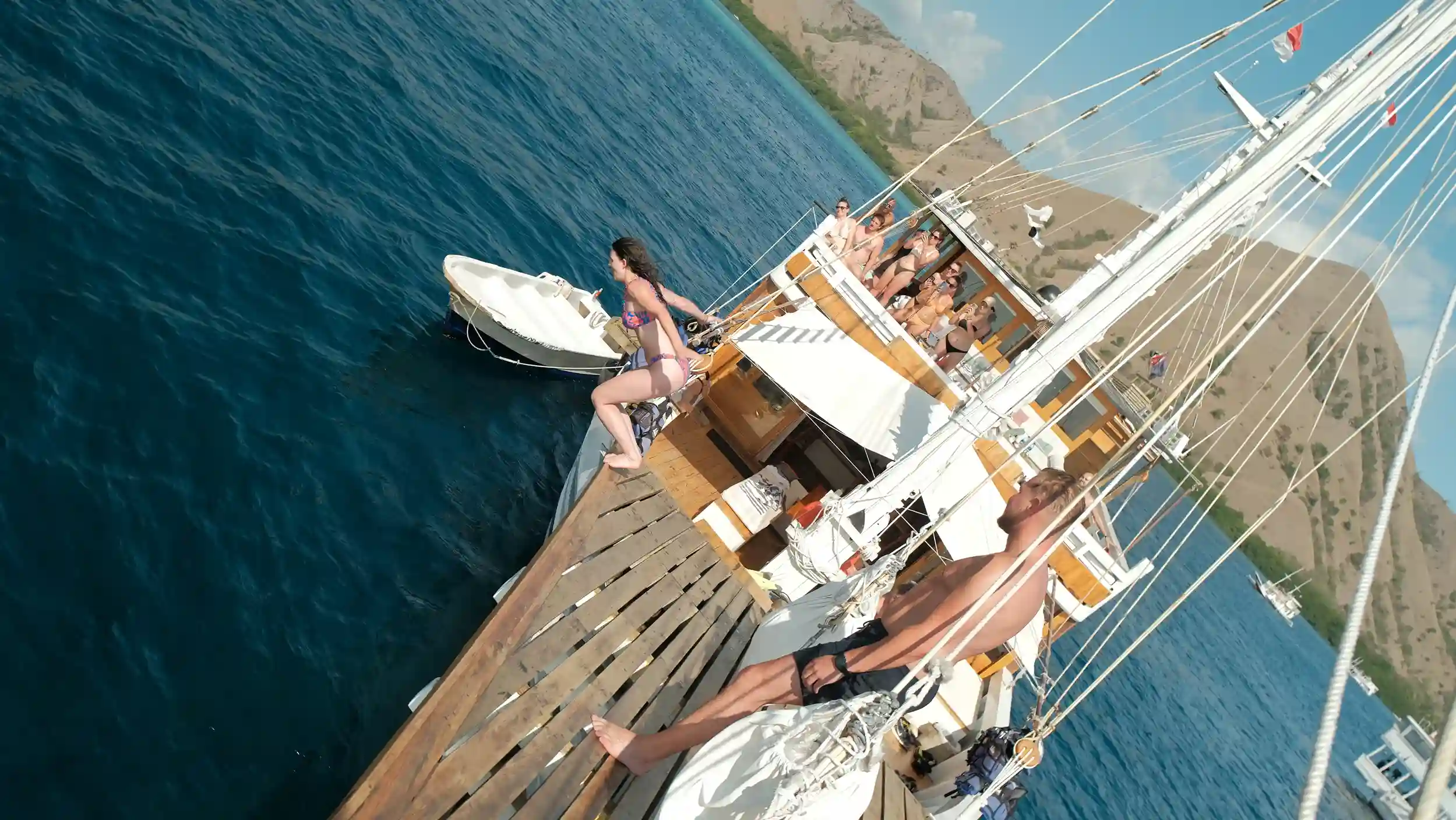
One Phinisi, 24 Guests: The 2027 Charter Math for Large Groups in Komodo
If you are looking for a Komodo phinisi for large groups, here is the direct answer: Aura Suci, a 30-metre…
Read more
Sail Komodo with Aura Suci
Eight en-suite cabins, every one with its own balcony, and a crew who read these tides daily.