
- Home
- Journal
- Sailing & Charters
- When Is the Best Month to Do a Komodo Liveaboard?
When Is the Best Month to Do a Komodo Liveaboard?
April to June and September to November are the best months for a Komodo liveaboard: calmest seas, best visibility, shoulder pricing. July and August have good visibility but wind in …
- Published 1 August 2026
- Read time 9 min
- Topic Sailing & Charters
April to June and September to November are the best months for a Komodo liveaboard: calmest seas, best visibility, shoulder pricing. July and August have good visibility but wind in the open straits and peak prices. December to March is the roughest and wettest window — and the peak of manta season.
When is the best month to do a Komodo liveaboard?
There is no closed season in Komodo. Boats sail all year, and the park is open all year. What changes is sea state, underwater visibility, the density of manta rays, and the price of a berth — and those four things do not peak in the same months, which is why every guide gives a different answer.
The short version: if you want the most comfortable sailing and the clearest water, come in the shoulder months. If you specifically want manta rays in quantity, come in the months everyone else calls low season.
| Period | Sea state | Visibility | Manta | Price level |
|---|---|---|---|---|
| January – March | Roughest; monsoon and rain | Variable | Peak season | Lowest; some boats in maintenance |
| April – June | Calmest of the year | Best of the year | Present year round | Shoulder |
| July – August | Windy in open straits and around Padar | Good | Present year round | Peak — highest of the year |
| September – November | Calm | Best of the year | Present year round | Shoulder |
| December | Deteriorating; monsoon builds | Variable | Rising toward the peak | High over Christmas and New Year |
Sources: seasonal profiles compiled from floresislandtravel.com, divehappy.com and operator scheduling patterns, 1 August 2026.
Why April to June and September to November win
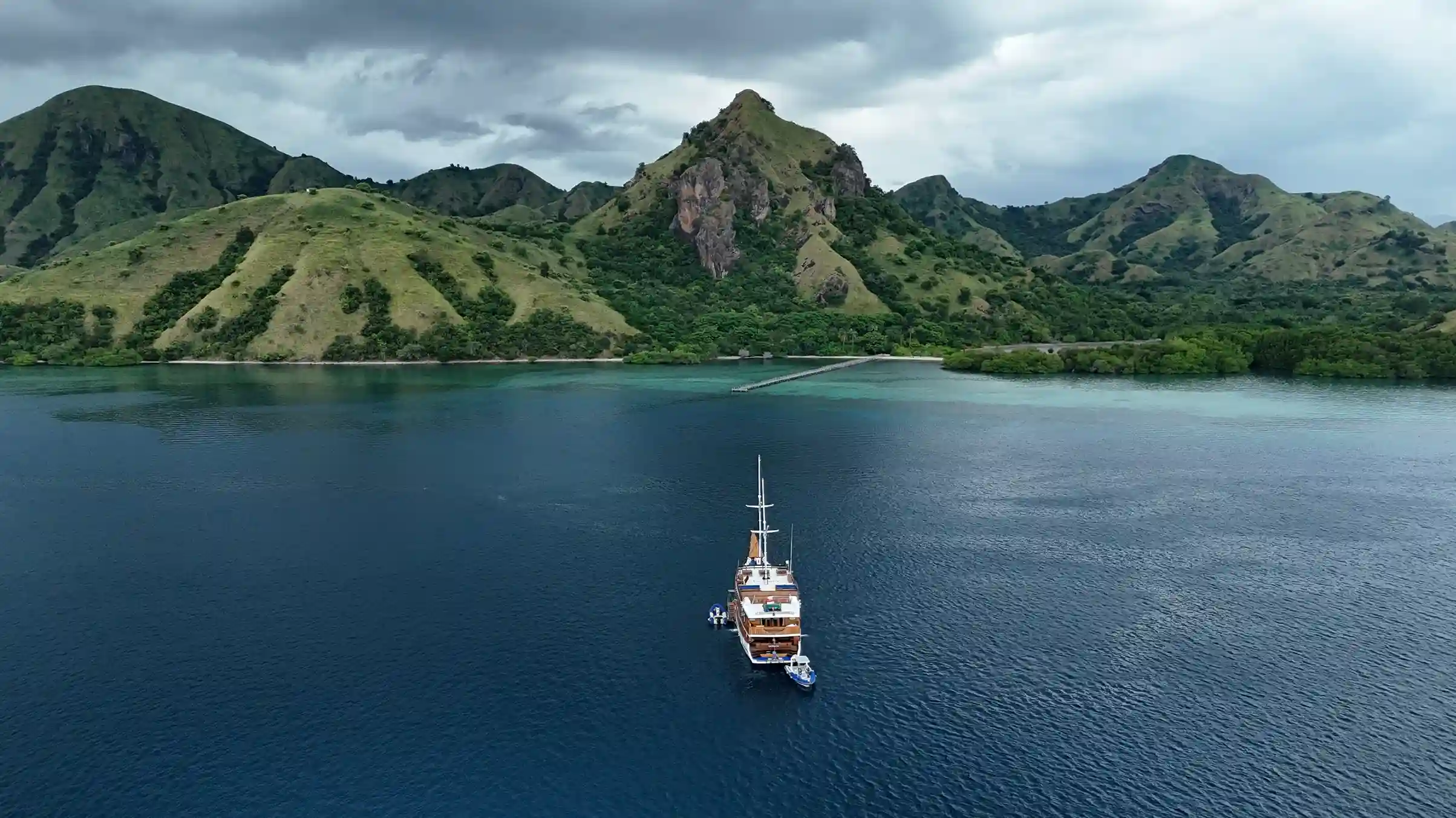
These are the two windows where everything that makes a liveaboard pleasant lines up at once. The transition seasons sit between the northwest monsoon and the southeast trades, so the straits are at their flattest. Water clarity in the northern and central park — Karang Makassar, Batu Bolong, Siaba, Sebayur, Tatawa — sits in the 15 to 30 metre range, and surface temperature runs roughly 26–29°C, warm enough that a 3mm suit or even a rash guard is enough for snorkelling.
Practically, the calm matters most on one leg. The overnight run from the Kalong anchorage to Padar is roughly three to four hours and it happens in the dark. On a flat night on a 30-metre phinisi it is a non-event and you sleep through it. In a monsoon swell it is the part of the trip people remember for the wrong reason.
July and August: good water, real wind, peak price
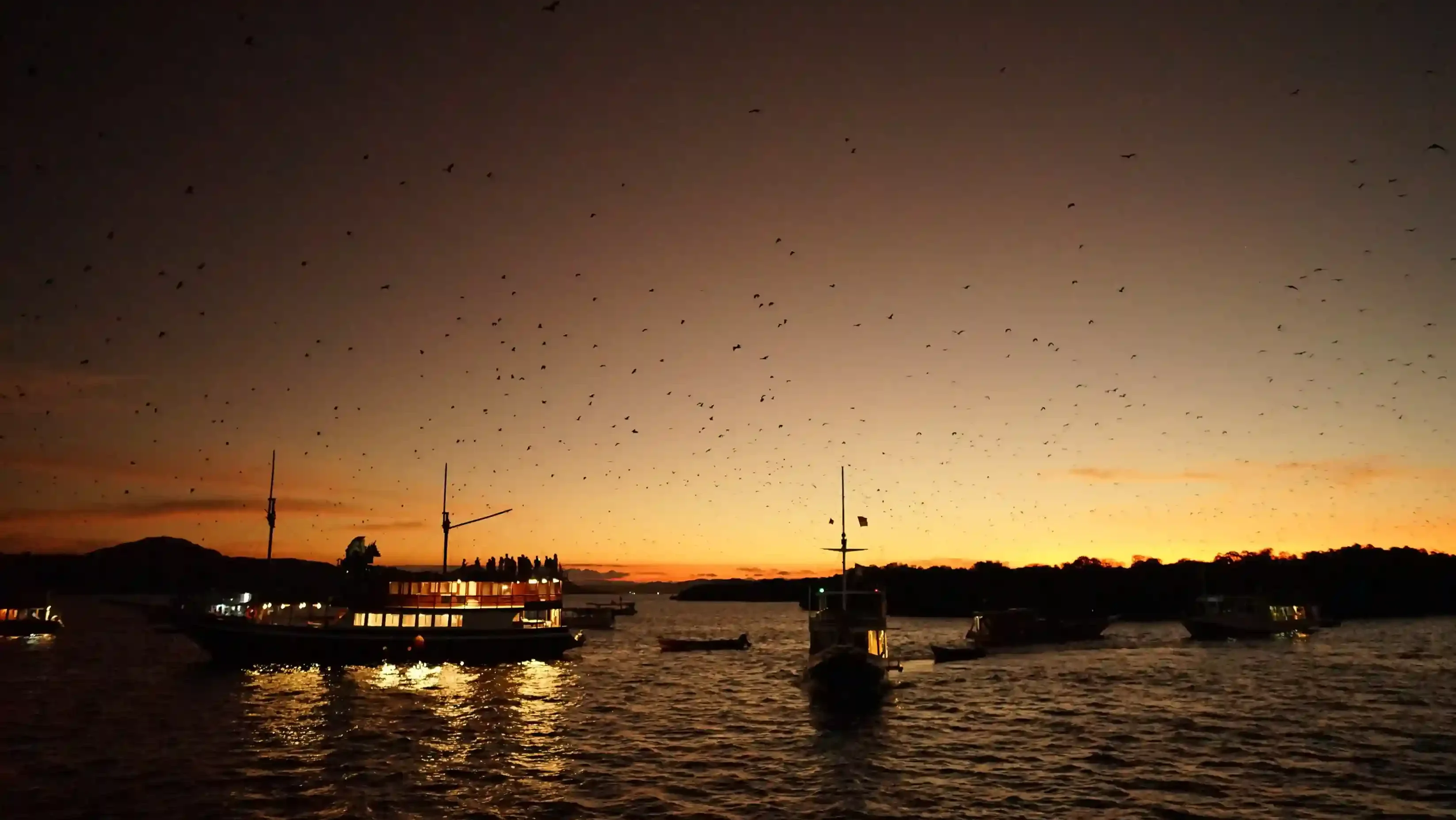
These are the busiest months of the Komodo year, driven by European and Australian holidays rather than by conditions. Visibility is genuinely good. The complication is wind: the southeast trades push hard across the open straits and around the exposed southern side of Padar, and boats routinely reorder stops or swap the Manta Point and Taka Makassar sequence to work with the day’s wind and current instead of against it. That reordering is a sign of a competent crew, not a downgraded itinerary.
Book earlier than you think for these months, and expect the highest berth prices of the year.
Send your dates and we will come back with live cabin availability on Aura Suci.
December to March: the manta trade-off
This is the northwest monsoon. It is the wettest, roughest window, some boats haul out for maintenance, and cancellations for weather are a genuine possibility rather than a theoretical one. It is also, unambiguously, the peak of manta season: plankton-rich water concentrates rays at the cleaning stations, and Karang Makassar and Manta Alley are at their most reliable.
If mantas are the reason you are going, this is the trade. Just build it into the plan: travel with schedule slack, ask the operator’s written reschedule policy before you pay, and prefer the sheltered central and northern anchorages over the exposed southern route.
| Your priority | Best months | Why |
|---|---|---|
| Calm sailing, first liveaboard | April – June, September – November | Flattest straits and the easiest overnight legs |
| Best underwater visibility | April – June, September – November | 15–30 m in the north and centre |
| Manta rays in numbers | December – March | Plankton-rich water; the recognised peak |
| Lowest berth prices | January – March | Low demand — accept weather and reschedule risk |
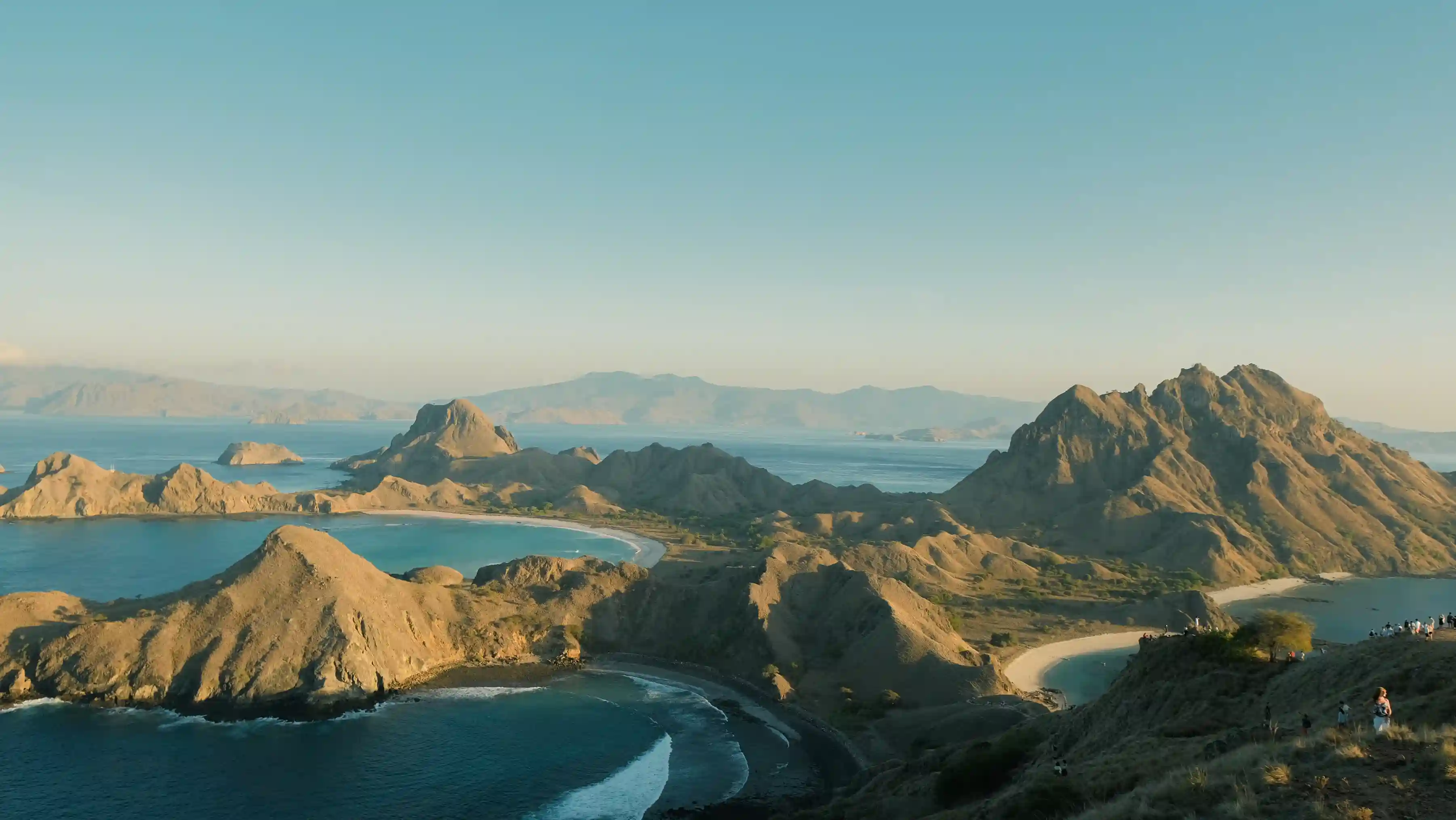
| Photography and light | April – June, September – November | Clear mornings for the Padar sunrise hike |
| Avoiding crowds | April – June, September – November | Peak crowding is July, August and the New Year window |
What the month does not change
The route. Kelor, Manjarite, Kalong, Padar, Pink Beach, Komodo or Rinca, Taka Makassar, Manta Point, Siaba and Kanawa appear on the standard itinerary all year. What the month changes is the order, the comfort and the odds — not the map. The park fee does not move either: Rp 250,000 per foreign visitor per visit under PP No. 36/2024, Rp 50,000 on a weekday or Rp 75,000 at weekends and public holidays for Indonesian visitors, in every month of the year.
A simple rule for 2027
If you have one week and one chance, book May, June, September or October. If you are coming for the mantas and can accept weather risk, book January or February and ask for the reschedule policy in writing. If you can only travel in July or August, book early and take a boat with enough hull under you to make a windy crossing dull — 30 metres, 6-metre beam and a 10–12 knot cruise is the specification that turns a choppy strait into a nap.
Frequently asked questions
What is the single best month for a Komodo liveaboard?
If you have to pick one, take May or September. Both sit in the calm shoulder windows with the best visibility of the year, before and after the July–August peak-price crowd, and both give reliable weather for the Padar sunrise hike.
Is Komodo worth it in the rainy season?
Yes, if you come for mantas and accept the trade. December to March is the roughest and wettest window, but it is also the recognised manta peak, and berth prices are at their lowest. Ask for the written reschedule policy before paying a deposit.
Are there months when boats do not run at all?
There is no formal closed season, but part of the fleet hauls out for maintenance during the December to March monsoon, so choice narrows. Departures continue throughout; availability and weather cancellations are the practical constraint, not a park closure.
Does the water temperature change much?
In the north and centre it runs roughly 27–29°C from November to April and 26–28°C from May to October. The south is different: upwelling from the Indian Ocean can drop it to 21–25°C between June and September, which matters if your itinerary goes to Manta Alley or Cannibal Rock.
When is the best month to see manta rays?
December to March is the peak because the water carries the most plankton. Karang Makassar, the shallow drift site also called Manta Point, has mantas year round at 8–18 m with gentle current, so a shoulder-season trip is far from a wasted one.
Which months are most expensive?
July and August, then the Christmas and New Year window. Those are demand-driven peaks rather than condition-driven ones — April to June and September to November have better sailing conditions at shoulder prices.
Check dates and hold a cabin
Aura Suci runs open-trip departures every Friday and whole-boat charters year round. Aura Suci is operated and sold through Komodo Luxury, the Labuan Bajo operator behind this boat since 2015. Bookings, cabin plans and the current rate sheet come from the reservations desk: WhatsApp +62 811 3823 875 or sales@komodoluxury.com. A booking is held with a 50% deposit (non-refundable) and the balance falls due 30 days before departure.
Every figure on this page was checked against the operator rate card and the official fee regulation on 1 August 2026. Rates move with season, fuel and exchange rate — ask for a written quote before you transfer anything.
Read next on this site
From the journal
More reading
 Sailing & Charters
Shared Luxury Cabin or Whole-Boat Charter in Komodo: The Honest Cost Trade-Off
Whole-boat charter in Komodo runs USD 1,800–30,000 per night, and the published market median is USD 7,225 per night across…
Read more Sailing & Charters
Do Boats Stop Running in Komodo During the Monsoon?
There is no closed season in Komodo National Park. What actually happens December to March: reduced fleet, dry-dock maintenance, weather…
Read more Sailing & Charters
Is Komodo Worth Visiting in January During the Rainy Season?
January is the wettest, roughest month in Komodo — and the peak of manta season with the lowest berth prices.…
Read more
Sail Komodo with Aura Suci
Eight en-suite cabins, every one with its own balcony, and a crew who read these tides daily.